


See more of our coverage on Google.
Add usatruckloadshipping.com as a preferred source!

Truckload shipping is a freight transportation method that moves cargo on a 43 feet to 53 feet trailer. Furniture shippers can use modes like full truckload (FTL), less-than-truckload (LTL), or partial truckload (PTL) to move their load with carriers or third-party logistics (3PL) companies. This guide explains the different shipping methods, how furniture is typically packaged and loaded, what drives cost, and when premium services like white glove delivery make sense.
Furniture retailers ship by truck to distribution centers, retail stores, final-mile cross-docks, and home-delivery partners.
The three most common truckload shipping modes to ship furniture are:
We’ve made a comparison chart to break down the basics of these modes and how to use them to ship furniture.
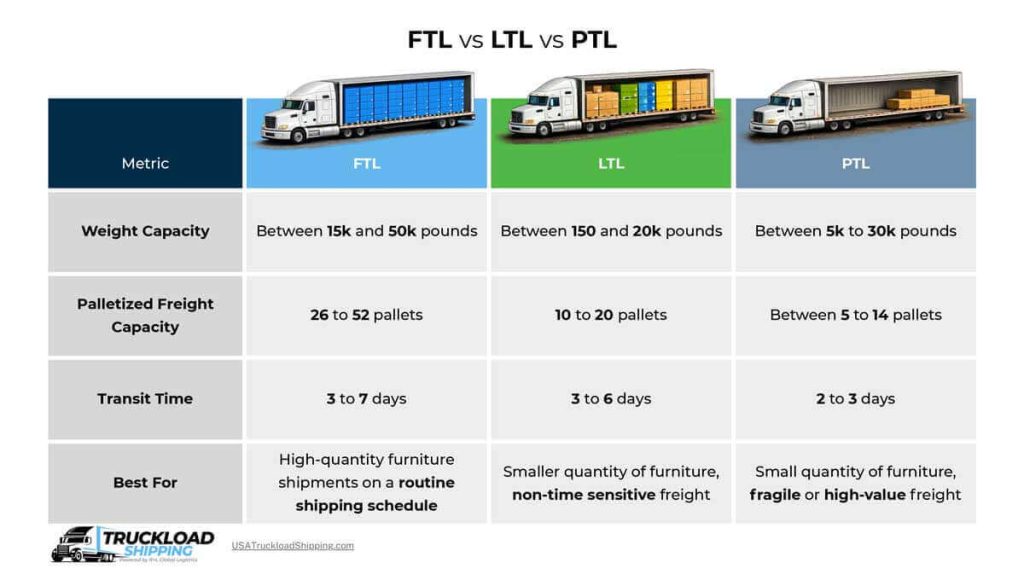
Intermodal is another great option when you want to reduce costs for longer furniture shipments. Intermodal is a freight method that moves a trailer or container using rail for long-haul and trucks for pickup and delivery. The transit is split between multiple vehicles, like ship to truck or truck to rail, for a cost-effective load due to less fuel being used.
Now, let’s further review mode so you can decide which is best for your haul.
A FTL shipment is when an entire semi-trailer hauls one shipper’s freight to one location.
Use FTL for furniture that:
Ship FTL when shipping high volumes of furniture and dedicated transport is required.
A LTL shipment is when freight from multiple shippers is consolidated onto one semi-trailer. Unlike FTL shipments, LTL shipments require multiple stops for each shipper’s cargo.
Most LTL carriers require furniture to ship palletized, crated, or fully boxed.
Use LTL for furniture that:
LTL shipments also require freight classification and a National Motor Freight Classification (NMFC) code for carriers to accurately price and identify furniture loads. NMFC codes are determined by the National Motor Freight Traffic Association (NMFTA), a U.S. non-profit organization that represents LTL carriers.
Furniture can have multiple NMFC codes ascribed to them depending on the product’s density, handling, and whether they’re assembled, boxed, or crated.
Ship LTL when your furniture load is too small for FTL but too large for PTL.
A PTL shipment is when multiple shippers’ freight are consolidated on a semi-trailer on the same route. Unlike FTL, PTL shipments can be large and heavy but only use a portion of space in the truck.
PTL pricing is often quoted by space and weight, but some carriers may still request details about your furniture and its classification for rating and claims handling.
Use PTL when:
Ship PTL when your furniture load is too small for FTL but too heavy for LTL.
In the next section, we’ll compare the costs of shipping furniture on FTL, LTL, or PTL.
Factors like freight weight, density, and distance can increase or decrease your freight rates.
Here’s a list of accessorial charges that can raise the cost of your shipment:
We’ve made a chart to compare the costs of shipping FTL, LTL, or PTL for you to make the best decision for your furniture load.
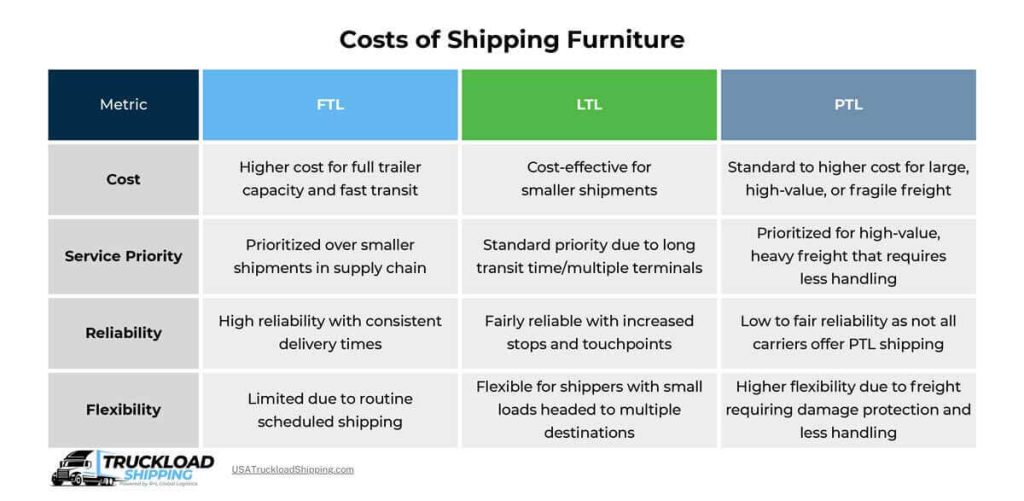
As you can see, each shipping mode offers cost-effective solutions based on the size of your furniture load.
In the next section, we’ll discuss the best additional shipping service for furniture to improve customer service.
White-glove delivery is a premium service level that may include inside placement, unpacking, debris removal, and basic assembly depending on the provider and contract. Furniture retailers use white glove delivery when customer experience and damage prevention matter more than low cost delivery.
It can be used for warehouse, showroom, and direct consumer deliveries. Keep in mind, white glove delivery service is an additional service that increases your freight rate. However, it helps improve customer service if you ship directly to your consumers.
Ensuring the safe arrival of your truckload furniture shipment starts with a thorough preparation process. We’ve provided a series of steps you can follow to ensure your furniture is ready for transport.
Safe delivery also depends on a reliable transportation provider. Find out how our extensive carrier network can help.
Need a truckload plan for your furniture shipment? USA Truckload Shipping can help you choose the best method for your goods. We have a 22,000+ carrier network across the country that can provide any service you require.
When you need to ship furniture to warehouses or customers, including cross-country services, you can contact us on (866) 353-7178 or request your quote today. You can also reach out to us on our contact page with any questions.
 Copy URL to Clipboard
Did you find this article helpful?
See more of our coverage on Google.
Add usatruckloadshipping.com as a preferred source!

R+L Global Logistics
315 NE 14th St., Ocala, FL 34470
