

See more of our coverage on Google.
Add usatruckloadshipping.com as a preferred source!

LTL shipping, or less-than-truckload shipping, is a freight shipping method that combines shipments from multiple businesses on one truck. It is best for freight that is too large for parcel shipping but too small to fill a full trailer. This guide helps shippers package and label LTL freight and follow National Motor Freight Traffic Association (NMFTA) classification and packaging requirements for LTL shipments.
LTL shipping is a freight shipping method that consolidates shipments from multiple shippers on one truck. Businesses use it when freight is too large for parcel shipping, but too small to fill a full truckload (FTL).
LTL shipping is a cost-effective strategy for ecommerce or retail businesses that are shipping smaller volumes of freight. Shipment size and weight thresholds vary by carrier, equipment, and lane, with most shipments between one and six pallets.
We’ve created a chart to illustrate the types of commodities that commonly ship as LTL freight.
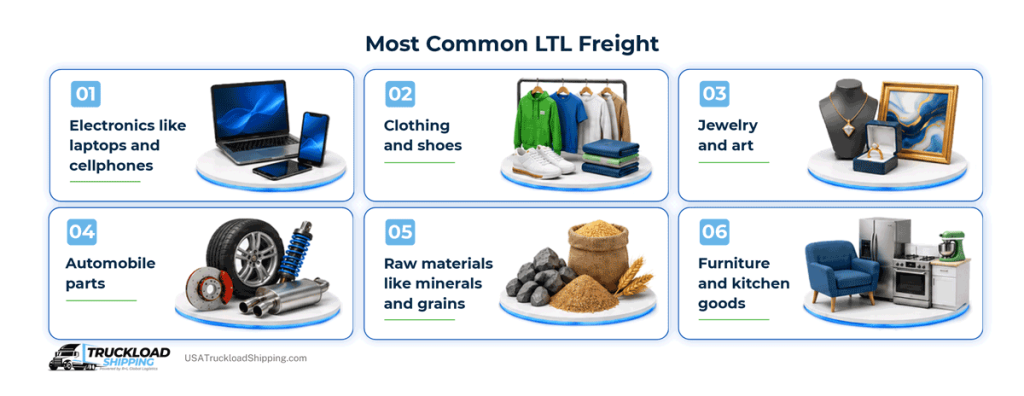
Shippers can also use LTL shipping to move hazardous materials (hazmat) freight as long as the load is packaged, labeled, and handled in compliance with the Hazardous Materials Regulations from the Pipeline and Hazardous Materials Safety Administration (PHMSA), an agency of the U.S. Department of Transportation (DOT).
LTL freight classification is influenced by density, handling, stowability, and liability. Unlike FTL shipments that may be oversized/over-length and require cranes to load and unload, LTL freight is typically lighter and easy to handle with loading equipment like a palletjack.
In the next section, we’ll discuss when it makes the most sense to use LTL shipping.
Use LTL shipping when your freight does not need a full trailer, can tolerate multiple handling points, and is not highly time-sensitive. LTL works best for palletized shipments that usually range from one to six pallets.
When to Use LTL Example:
An artisan woodworker runs a mid-sized manufacturing business of custom furniture. The woodworker has five separate contracts with five home décor stores across the Southeast in the United States. Each store requires a biweekly restock delivery and consists of a mixed load of furniture pieces, averaging six to eight pallets per shipment, weighing roughly 4,000 to 6,000 pounds total.
The woodworker considers booking one truck to consolidate the loads and ship. Many LTL shipments range from about one to six pallets, while full truckload shipments are typically larger and use most or all trailer space. The woodworker would pay more for space and mileage they do not need, especially with deliveries spread across multiple cities.
While LTL shipments reduce shipping fees, they may increase transit time due to multiple touchpoints and delivery stops. Use LTL when your freight isn’t urgent or high-quantity.
According to the National Motor Freight Classification (NMFC), LTL freight must include its freight classification and NMFC code to ship. NMFTA is a U.S.-based non-profit that represents the interests of for-hire carriers and standardizes LTL shipping practices.
Let’s break down freight classes, NMFC codes, and why these classifications are necessary to ship LTL freight.
A freight class is a shipping industry standard used to categorize cargo and determine rates for LTL shipments. NMFTA assigns 18 levels of freight classification ranging from 50 to 500 based on the freight’s weight, height, and density.
Class 50 through 85 typically represent dense freight like bricks, automobile parts, and foods. Class 92.5 to 500 represents freight with lighter density like stuffed furniture, cell phones, or cotton balls.
The freight classification process includes four freight factors:
These factors affect freight handling requirements and pricing as denser freight is often less expensive and faster to ship.
A NMFC code is a five to six digit code to classify LTL freight. Like freight classification, freight’s density, stowability, handling, and liability dictate which NMFC best fits a product for a carrier to price and ship the load.
NMFC codes are subject to change annually at NMFTA’s discretion. It’s important for shippers to stay up-to-date on NMFC code changes for their LTL freight. Whether a shipper checks using NMFTA’s NMFC lookup tool, ClassIT+, or speaking with an expert freight consultant, not verifying freight’s class and NMFC code can lead to costly reclassification or reweigh charges.
A reclassification charge occurs when a shipper uses the wrong freight class. A reweigh charge happens when the listed shipment weight is incorrect.
Both reclassification and reweigh slow down the shipping process and leave shippers to pay unnecessary accessorial charges.
A Progressive Rotating Order (PRO) Number is a seven to 10 digit number used to identify and track LTL shipments. Carriers assign a PRO Number to identify and track and LTL shipment. PRO Numbers are listed on a shipper’s BoL and freight packaging.
A PRO Number is often paired with a Standard Carrier Alpha Code (SCAC). A SCAC is a two to four letter code issued and verified by NMFTA to reduce freight fraud. SCACs help to confirm the identity of the carrier handling a shipper’s LTL freight.
The main benefits of LTL shipping are lower transportation costs, flexible service options, broader carrier access, and better trailer utilization for small freight. These benefits are strongest when shipments are palletized, non-urgent, and too small for full truckload service.
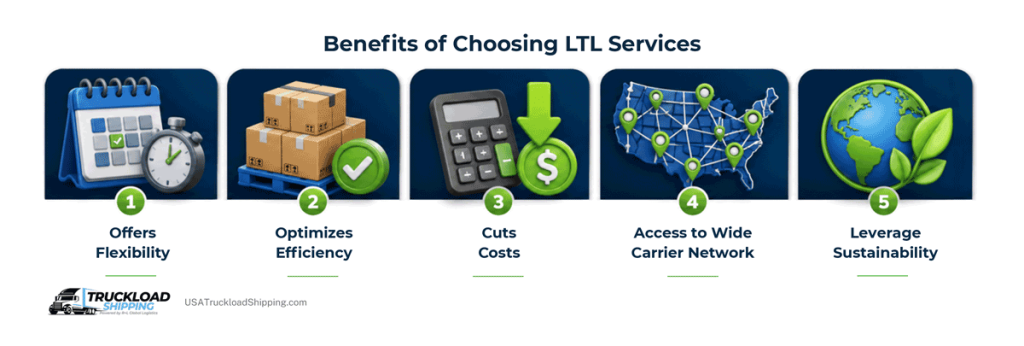
LTL carriers offer a range of services such as inside pickup and delivery, expedited shipping, and liftgate services, each catering to a shipper’s customer needs.
LTL shipments optimize the use of each truck with consolidated loads that are smaller, easier to handle, and faster to ship.
LTL shipping is typically more affordable than FTL due to lighter loads that weigh less and take up less space in a truck.
Freight providers like third-party logistics (3PL) companies partner with a wide variety of LTL carriers with capacity to ship anywhere in the U.S., any time. Shippers that use a 3PL’s carrier network can access more carriers across a wider geographic area.
Freight consolidation minimizes the number of trucks on the road and reduces emissions and fuel consumption. LTL services help shippers lower fuel surcharges and practice eco-friendly shipping.
If you need help identifying the correct freight class, NMFC code, or accessorial requirements for an LTL shipment, our freight team can help you review your shipment details before booking. Call us at (866) 353-7178 or send our freight team your questions through our contact form. Get in touch today so your shipment can be on the road tomorrow.
Sources:
The Standard That Keeps Freight Moving, NMFTA
Hazardous Materials Regulations, U.S. Department of Transportation Pipeline and Hazardous Materials Safety Administration, 2017
Find Out If Your LTL Freight Items Have Changed, NMFTA, 2025
Standard Carrier Alpha Code, SCAC, 2025
 Copy URL to Clipboard
Did you find this article helpful?
See more of our coverage on Google.
Add usatruckloadshipping.com as a preferred source!

R+L Global Logistics
315 NE 14th St., Ocala, FL 34470
