

See more of our coverage on Google.
Add usatruckloadshipping.com as a preferred source!

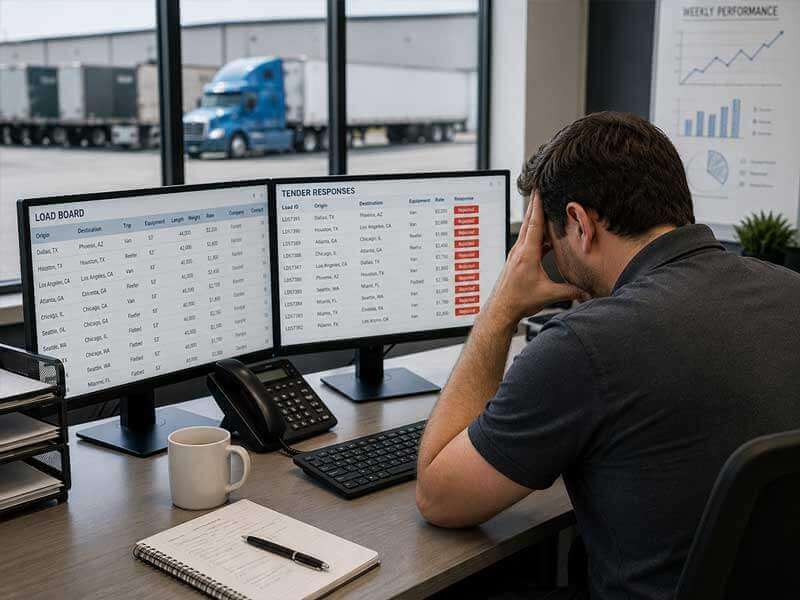
Tender rejection is when a freight carrier declines a shipper’s load offer. High tender rejection can signal pricing issues, tight capacity, or operational issues in a shipper’s freight network. This article helps you rectify this issue and improve your acceptance rate.
A tender rejection rate is a measurement of carriers declining a shipper's request to transport a load, aka “tender.”
Freight market resources like FreightWaves SONAR offer data tools for shippers to track tender rejection rates and navigate supply chain disruptions.
Tender rejection rates are calculated by dividing the number of rejected tenders by the total tenders offered, expressed as a percentage. We’ve listed the formula below:
Number of Rejected Loads ÷ Number of Loads Tendered = Tender Rejection Rates
A high tender rejection rate can indicate freight capacity issues, but some level of rejection is normal in most freight markets.
Tender rejection happens when carriers decide a load is not a good fit for their pricing, capacity, schedule, or operating constraints.
Let’s take a look at the many causes of tender rejection.
A Request for Proposal (RFP) is a shipping document that lists a shipper’s desired freight services for carriers to offer transportation solutions.
If an RFP lacks key details, carriers may reject tenders because they don’t fully understand the scope of the requested services and commitment.
Carriers rely on detailed RFPs to evaluate costs, timelines, and resource allocation. Insufficient information prevents them from conducting thorough assessments.
Other problems that an unclear RFP can cause include:
Without precise specifications, carriers cannot accurately assess whether they have the resources and capacity to meet the shipper’s requirements.
A rate disparity is a gap between spot rates and contract rates that affects truck capacity.
Freight rates fluctuate based on supply and demand. If market rates rise above the contract rates offered in an RFP, carriers may reject tenders in favor of higher-paying spot market opportunities.
Carriers also have limited capacity and aim to utilize it for the most profitable loads. If contracted rates are significantly lower than spot rates, they’ll likely prioritize spot market shipments and reject your shipment.
An operational challenge is a disruption in the completion of a delivery. Carriers choose loads that are within their operational capabilities. If a shipment is too challenging for them to perform, they’ll likely reject it.
Carriers may reject tenders when pickup or delivery sites are hard to access, slow to load, or difficult for tractor-trailers to maneuver.
Narrow roads or low hanging tree branches can make it difficult for a trucker to retrieve or drop off freight.
The actual destination where the freight will be picked up or delivered will need enough room for a tractor and trailer to maneuver.
Carriers require time to plan their routes and allocate equipment. If tenders don’t give transportation providers enough lead time, they may have no choice but to reject the load.
Keep in mind what short lead times mean for the carrier in terms of service abilities:
Because of these challenges, many carriers are inconvenienced by loads and will avoid them altogether.
During peak seasons or high-demand periods, carriers may be at full capacity. Carriers will reject loads when they do not have the equipment, drivers, or schedule capacity to move them.
When this happens, carriers will prioritize loads based on profitability, established relationships, and operational ease.
Tender rejection doesn’t just cause minor delays, but potential major shipping operational issues. Let’s take a look at the probable repercussions.
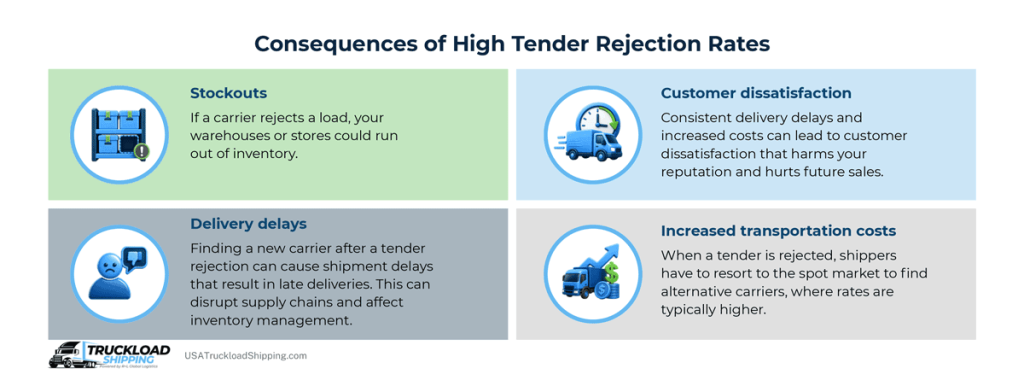
Understanding these consequences helps you better manage your tender rejection rates and maintain the efficiency of your shipping operations.
According to SONAR, tender rejection rates between 5% and 7% may reflect a healthy demand and carrier availability. Higher tender rejection rates between 10% and 15% typically occur during holiday seasons where demand exceeds freight capacity.
That said, tender rejection rate will fluctuate based on market conditions, lane difficulty, seasonality, and pricing.
In general, lower rejection rates suggest more stable carrier coverage, while higher rates may signal pricing gaps, tight capacity, or operational friction.
When a tender is rejected, the first step is to identify why the carrier turned down the load and review the following:
From there, retender the load to backup carriers, adjust the rate or timing if needed, and document the rejection pattern so you can spot recurring issues.
Over time, tracking rejected tenders helps you improve your routing guide, strengthen carrier relationships, and reduce future disruptions.
Shippers can improve tender acceptance by providing accurate shipment details in RFPs, tendering freight earlier, and strengthening carrier relationships.
Carriers are more likely to accept tenders when freight is profitable and predictable, and we’ve created a checklist of techniques for shippers to incorporate into their network operations.
Use this checklist before booking your next load:
Now, we’ll take a closer look at these steps and learn how to apply them in your business practices.
An effective RFP improves your acceptance rate with carriers.
When crafting an RFP, you must include:
Help carriers better understand the freight you need to move by including the following shipment details:
Communicate your service expectations clearly in your RFP. Providing key performance indicators (KPI) helps carriers better understand their responsibilities and perform to your satisfaction.
Prioritize high-impact lanes with predictable schedules and higher volumes for dedicated capacity arrangements. Exclude lanes with irregular volumes from your RFP.
Structure your RFP to align with carriers' existing networks. By clustering locations within specific regions, you create more attractive bid opportunities, enhancing coverage and reducing the risk of tender rejections.
Give carriers enough time to plan and schedule loads to increase acceptance rates.
Provide at least two to five days of lead time for carriers when scheduling a freight pickup. Allowing enough lead time also saves you additional money that you’d have to pay for expedited shipping services.
Carriers prefer to pick up freight at locations that offer quick, hassle-free loading.
There are a few easy methods you can use to make the loading experience better for truckers.
Making pickup easier for your transportation provider improves carrier relationships and makes future tenders easier to cover.
Transportation forecasting involves using data analysis and predictive modeling to anticipate future transportation needs.
This data helps you:
Understanding market dynamics allows you to adjust your strategies accordingly.
For example, during tight markets with high spot rates, carriers may reject tenders in favor of more profitable opportunities. Being aware of these trends enables you to offer competitive rates and improve tender acceptance.
Forecasting also helps you identify optimal routes and schedules for your shipments. By leveraging this information to your advantage, you can organize loads that are more attractive to carriers.
Truckload rates like fuel costs directly affect carrier operating expenses and freight rates.
Reviewing resources like AAA Fuel Prices or Gasoline and Diesel Fuel Update help shippers benchmark fuel prices and create competitive transportation RFPs.
Working with a third-party logistics (3PL) provider gives businesses access to a broad network of carriers. A 3PL is a logistics company that insources and outsources trucking services like freight brokerage, transportation, and warehousing.
A 3PL can help in a variety of areas, allowing shippers to:
By diversifying carriers with a 3PL network, you’ll reduce reliance on a single provider and increase flexibility during market fluctuations.
Need help improving tender acceptance? Talk with our team about practical ways to reduce rejections and stabilize freight coverage.
Share your RFP with our team if you’d like help reviewing your options. If you have questions about our services, call us at (866) 353-7178 or visit our contact page to get in touch with our team.
Source:
SONAR Tender Rejection Index (STRI) and Outbound Tender Rejection Index (OTRI), SONAR
Fuel Prices, AAA, 2026
Gasoline and Diesel Fuel Update, U.S. Energy Information Administration (EIA), 2026
 Copy URL to Clipboard
Did you find this article helpful?
See more of our coverage on Google.
Add usatruckloadshipping.com as a preferred source!

R+L Global Logistics
315 NE 14th St., Ocala, FL 34470
