A spot rate is a one-time freight rate for a single shipment. A contract rate is a long-term negotiated freight rate for shipments moved over a defined period. Both spot and contract rates are beneficial to shippers moving goods via truckload depending on carrier capacity, lane stability, and other factors. We’ll use our knowledge to explain how they work to secure the right truckload price for your business.
Key Takeaways:
This guide will explain when you should use spot rates and contract rates.
A spot rate is a one-time, “on the fly” truckload rate for a specific shipment in the current market. A contract rate is a negotiated, dedicated, and long-term truckload rate for continuous transportation over a specified period.
Spot rates are determined by the spot market. The spot market is used for one-off freight transactions priced against current supply and demand. Shippers, carriers, and brokers can monitor spot-market trends with freight data platforms like DAT.
The spot market reflects rates based on the following factors:
Shippers can assess the current rates to book a particular truck for immediate, one-time freight transportation, such as expedited shipments.
Contract rates are negotiated rates between carriers and shippers, or shipper and a 3PL. Shippers use contract rates to haul multiple freight shipments during a dedicated amount of time.
Contract rates help you stay on schedule and streamline your shipping. Most are negotiated for six months or longer, with a focus on your budget goals and consumer demand. This gives you peace of mind that your business is in good hands today and in the future.In simple terms, spot rates prioritize flexibility, while contract rates prioritize predictability. We’ve created a comparison chart below to outline the main differences between the rates.
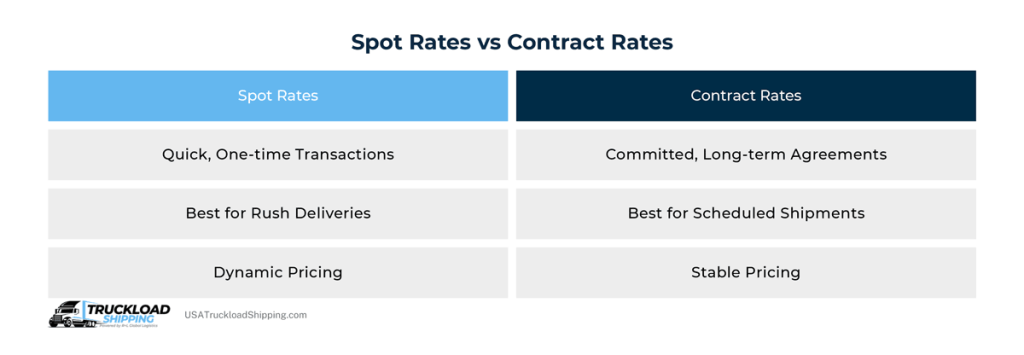
Let’s take a look at a hypothetical situation where a spot rate would be appropriate:
Picture one of your retailers requesting a rush delivery of mascara containers because they forgot to include the item in their last order. They need them as soon as possible for a beauty event in a few days. This is where spot rates are handy.
Now, here’s a hypothetical example where a contract rate would work best:
Let’s say you own a warehouse that ships beauty supply goods monthly to various retailers nationwide. You require reliable shipping to deliver freight to consumers who expect their cosmetic goods at the same time each month. In this scenario, a contract rate would be essential.
Spot and contract pricing respond to freight-market conditions, but they do so in different ways. Spot rates react faster to short-term changes in freight capacity and demand, while contract rates usually reflect long-term negotiations based on expected volume, service requirements, and lane history.
You can use trend tools to learn the current National Van Rates, as well as flatbed and reefer rates.
Spot rates are determined by the spot market, which is based on national pricing for loads at any given moment. The spot market, in turn, is dynamic and poses risks to shippers that affect their freight costs and overall supply chain.
We’ll review when to use this type of rate and how to avoid risks in the following sections.
Freight market volatility is common in the freight industry due to variables like fuel rates, carrier capacity, and seasonal demand that impact truckload rates.
A volatile lane is a lane that changes frequently in price and freight capacity.
For one-off moves, freight brokers or carriers review a lane’s history that best fits a shipper’s single load. Spot rates often rise on lanes with inconsistent volume, limited truck availability, or expedited pickup requirements..
Spot truckload rates run the risk of tender rejection and gaps in service due to lane volatility or the freight itself.
Tender rejection is a freight shipment that a carrier refuses to haul. Carriers might reject spot loads to secure contracted loads that pay more. Tender rejection also includes service variability as carriers may not have the available truck for a spot shipment.
Contract rates offer a predictable freight rate for both shippers and carriers to use when shipping goods. They work best when a shipper can offer repeat volume, forecast accuracy, and require lane consistency
Contract rates negotiate a set amount of freight a shipper needs a carrier to move each month or year.
For large shippers needing to ship high-volumes of freight every month, contracts help them secure dedicated lanes at their desired rate. This includes the required shipping mode, usually full truckload (FTL), and loading equipment, like liftgates.
Freight data is a wide-ranging analysis of freight industry trends in spot and contract rates, tender rejection information, fuel prices, and more.
Freight database tools like DAT or SONAR help shippers and carriers organize and clean up data to improve tender acceptance and offer shippers preferred contract rates.
Whether you’re relying on spot or contract rates for your shipments, use our checklist to ensure you’re asking your freight provider the right questions to get your load on the road.
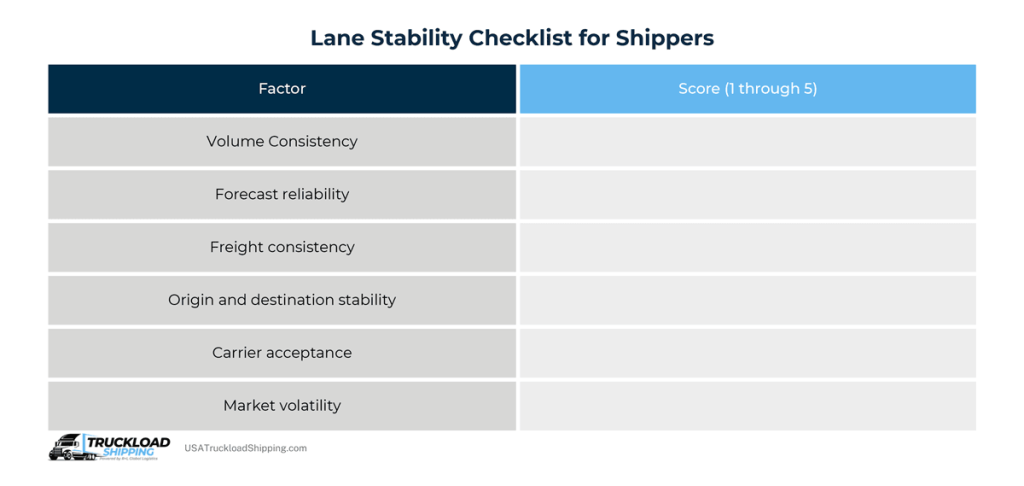
The total score determines the following factors:
In the next section, we’ll review how to navigate market shifts to secure lanes for your loads.
The freight market is ever-changing and spot and contract rates fluctuate when capacity is loose or tight.
Loose capacity means truck availability exceeds current shipper demand. In these markets, spot rates often soften, contract negotiations may become more favorable for shippers, and carrier options usually expand..
Tight capacity means truck availability is limited relative to shipper demand This increases spot and contract rates and reduces carriers’ resources, like trucks or drivers, to haul freight.
What we do:
Typical timeline: Our freight consultants review your freight details on a 1-on-1 phone call or quote request to deliver an estimated spot or contract rate for your load in minutes.
What you’ll need: Freight information (including size, temperature-control, hazmat, or fragile details), origin, destination, and timeline.
Why choose us: USA Truckload Shipping is a 3PL with a carrier network over 22,000, offering capacity and pricing matched to your shipping needs.
Outcome: Your load is secured with our experts who will provide a spot or contract rate to support your supply chain in any freight market.
Get in touch with our shipping experts at (866) 353-7178 or fill out a request for proposal to get started today.
What is a spot rate and a contract rate?
A spot rate is an “on the fly” truckload rate to book a lane for a one-time shipment. Spot rates are commonly used by small shippers who do not need dedicated lanes or contract rates to occasionally ship small quantities freight. A contract rate is a long-term shipping agreement between a carrier and a shipper to move high-volume freight each month or year.
Can high-volume shippers use spot loads?
High-volume shippers may benefit from using spot loads for freight that needs to be shipped urgently, or if they want to “test drive” a carrier’s services before committing to a contract rate.
Are contract rates worth the commitment?
Contract rates are beneficial to high-volume shippers who need predictable, stable rates and secured capacity. Spot rates offer quick solutions for urgent loads, but contract rates help shippers stay ahead on capacity forecasts and market shifts to keep their supply chain fluid.

R+L Global Logistics
315 NE 14th St., Ocala, FL 34470
