Consolidated freight is a shipping method that combines multiple small shipments into one load. Businesses often use consolidated freight for less-than-truckload (LTL), intermodal, and rail shipments. In this guide, you’ll learn what consolidated freight is, when to use it, how each shipping mode works, and how to lower costs without losing visibility or delivery control.
Key Takeaways:
Need to consolidate your freight to start shipping? This guide is for you.
Consolidated freight is a shipping method that groups smaller shipments into one. Shippers transporting smaller quantities of freight opt to consolidate so they can reduce shipping costs by only using the needed space for their cargo.
Consolidated freight can move through several shipping modes:
We’ve provided a table that compares the different methods of transport used for consolidated freight shipments.
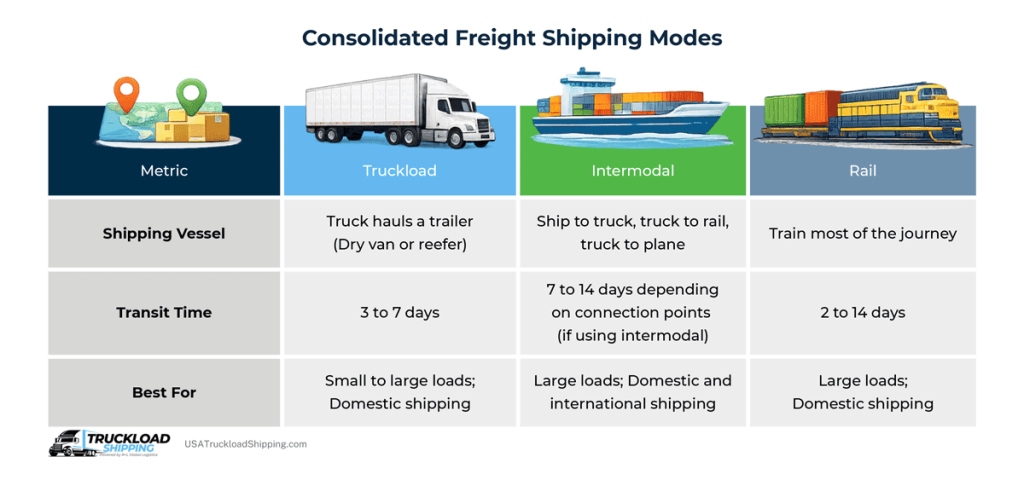
Consolidated freight shipments consist of items that are too large for parcel service, but too small to justify full truckload, full container load, or other dedicated capacity.
Consolidated freight is especially suitable for intermodal shipping when freight requires multiple connection stops on its way to its final destination.
Use consolidated freight when freight is:
In the next section, we’ll go over the various shipping modes you can use to deliver consolidated freight.
You can ship consolidated freight on various shipping vessels for faster local transit or coast-to-coast shipping. The best option ultimately comes down to the needs of your freight.
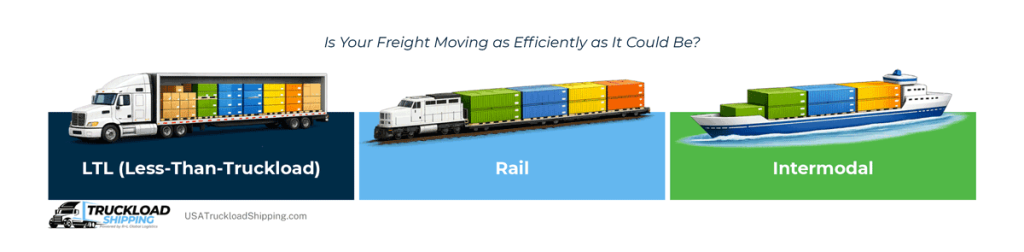
Less-than-truckload (LTL) is a shipping mode that consolidates freight from multiple shippers into one semi-trailer. LTL works best for palletized freight that is too large for parcel shipping, but too small to fill an entire trailer.
Semi-trailers used for LTL shipments are:
Consolidated freight can ride on either a dry van or reefer, as both have the capacity for large amounts of cargo.
For many LTL shipments, the shipper must provide accurate dimensions, weight, commodity details, and the correct NMFC code and freight class.
The National Motor Freight Traffic Association (NMFTA) states that the NMFC system standardizes how LTL freight is classified for rating and handling. Accurate classification helps reduce billing disputes, reweighs, and reclassification charges.
Intermodal is a shipping mode that delivers freight on multiple vehicles with multiple connection points. These connection points can be from a port to a warehouse to a distribution center using a ship, truck, and rail.
Intermodal shipping is used to move full-container loads (FCL) less-than-container-loads (LCL). LCL is a shipping mode where cargo is consolidated in one container on a ship in two to three pallets.
Intermodal shipping is best for long hauls. The shipping method also requires a chassis. A chassis is a skeletal steel frame with wheels, axles, and twist locks that’s designed to move containers. Using chassis trailers will result in an accessorial charge to your overall freight rate.
Rail is a shipping mode used to transport consolidated freight on a train for long-distance hauls. Shipping by rail can be a cost-effective transit mode for long haul shipments. Unless you’re shipping bulk materials, most rail freight will need to travel by truck to the final destination. This means LTL shipping is still necessary when using this mode of transport for consolidated freight.
Rail shipping can also be paired with rail drayage, which is a shipping mode that connects truck and rail to deliver freight. A truck picks up freight from a port or rail terminal to load onto a train before being shipped to its final destination.
We’ll discuss how to use each shipping mode to reduce shipping fees and streamline your company’s logistics in the next section.
Whether you’re shipping domestically via truck or internationally via intermodal, you can reduce your shipping costs by following our checklist.
Use this checklist to prepare your next consolidated haul for transportation:
No matter how you ship your consolidated freight, you’ll need a reliable logistics partner for each step of the way. We work with over 22,000 vetted carriers trained in various shipping modes to transport consolidated freight anywhere in the United States.
Whether your freight requires drayage services or expedited shipping, USA Truckload has the resources to streamline your freight transit of any size.
What we do:
Typical timeline: We start building your consolidated freight plan the same business day and coordinate pickup and transit based on your shipment’s ready date, lane, and service requirements. Transit times vary by mode, route, and appointment availability.
What you’ll need: Commercial invoice or BOL details, pallet count, dimensions, total weight, commodity description, pickup and delivery addresses, requested ship date, delivery requirements, and freight class/NMFC item for LTL shipments when applicable.
Why choose us: We help retailers, grocery companies, and ecommerce businesses book consolidated freight with experienced carrier coordination, mode-specific planning, and practical support that helps reduce delays, billing issues, and unnecessary shipping costs.
Outcome: Your freight moves through the right consolidated shipping network, arrives on schedule, and avoids preventable delays and added charges caused by incomplete shipment details or poor mode selection.
Get in touch with our consultants and call (866) 353-7178 or get a quote in just minutes.

R+L Global Logistics
315 NE 14th St., Ocala, FL 34470
