

See more of our coverage on Google.
Add usatruckloadshipping.com as a preferred source!

Parcel and freight shipping services are two terms in the transportation industry that are used interchangeably. Many shippers don’t realize how drastically different they are from one another. If you want to enjoy a successful shipping experience, it’s essential that you’re able to tell the difference between the two.
A parcel is typically a small package or envelope that’s shipped using postal or courier services. Parcels are shipped and delivered separately, rather than being palletized into one load. Most parcel shipments go through multiple checkpoints and transfers before arriving at the final destination.
You should use parcel shipping when:
In today’s world, customers want their goods as soon as possible. If time isn’t on your side, parcel shipping allows for 2-day, overnight, and even same-day delivery options.
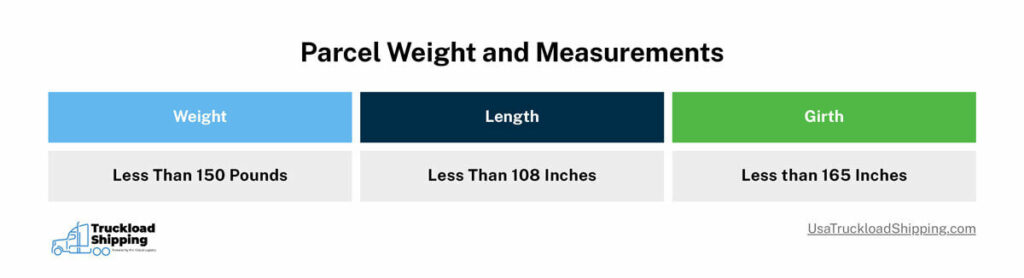
Parcel transport is ideal for small and lightweight orders. This is perfect for e-commerce & small businesses that need to send one-off shipments to customers all over the country. Parcel shipments can vary in size, but here are the typical measurement and weight limits.
Due to the frequency of parcel shipping, many of the carriers that perform the service are able to offer affordable prices. The small size and lightweight nature of parcel shipments help with their affordability as well.
When you ship a parcel, you and your customers will be able to track it accurately from start to finish. This gives both parties full visibility of the package or envelope.
Freight refers to large shipments of cargo that are transported in via truck, rail, vessel, and aircraft. Freight is often secured to a pallet, but it can also be transported as loose packages. While freight shipments can stop at different terminals along a route, they travel a more direct path to the final destination than parcels.
You should use freight shipping when:
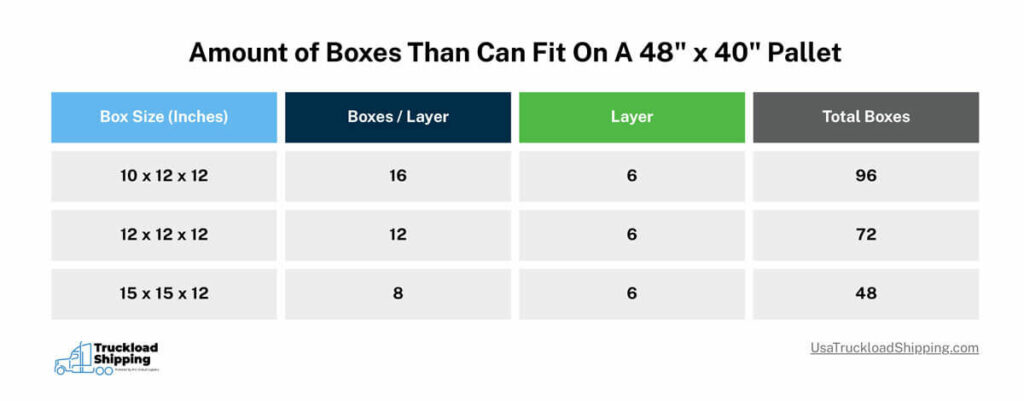
Freight shipping is the best method to use when you need to ship large volumes of cargo at once. To demonstrate this, consider how many boxes you’re able to secure to a 48” x 40” pallet.
Freight shipping allows you to take advantage of multiple transportation modes and services. For loads that are time-sensitive, you can take advantage of air transport. Vessel transport is essential if you’re shipping goods overseas.
As far as truckload services are concerned, you can take advantage of LTL or FTL. LTL shipments are usually eight pallets or fewer, and they share trailer space with other people’s freight.
FTL shipments dedicate an entire trailer to one shipper, regardless of shipment sizer. These two options give you the flexibility to pick a transportation solution that’s best for your cargo.
Finally, freight shipping is best for long-haul transport. The pricing models for freight shipping are designed to benefit high volume shipments that are traveling long distances. Using multiple modes of transport, which are often necessary for long-haul shipments, also help with cost-effectiveness.
The cost of parcel and freight shipping can vary drastically based on the cargo, distance, mode of transport, and much more. For the sake of simplicity, we’ll focus on the cost structure
of parcel and freight shipments transported by truck in the following sections.
A parcel shipment typically costs between $4.50 and $20. The parameters carriers use in the parcel cost structures can vary.
That said, here are the most common factors they consider:
The actual weight is the parcel’s mass after being measured on a scale, while dimensional weight accounts for the volume of the parcel. Whichever weight is higher is the one carriers apply in their calculation.
Distance plays an important role as well. The farther a parcel travels, the more a customer will have to pay.
The specific shipping service is the final factor. Faster modes of transport, like 2-day or overnight shipping, are more expensive because they require more effort on behalf of the carrier.
The cost structure for freight shipping differs between FTL and LTL. Let’s take a look at the FTL cost structure first.
All of these factors are evaluated to provide FTL shipments with a per-mile or flat rate. Dry van rates for FTL are between $1.50 and $2.20, but they change every week.
The cost structure for LTL shipments are based on the freight class and NMFC code of the cargo. Freight class is used to categorize freight into one of 18 classes, while NMFC codes are specific identifiers that are assigned to each commodity.
While you’ll pay less for LTL than FTL, giving an accurate estimate is difficult due to the complexity of freight classes and NMFC codes.
Parcel and freight shipments can take anywhere between one and seven days before reaching the final destination. Shipping times are largely determined based on distance and the service used.
While transit times are similar for both services, it should be noted that it takes exceptionally more time to prepare a load of freight. Cargo must be gathered and secured to a pallet. Carriers will also require you to set up a pick-up date. However, a carrier’s schedule can severely restrict the pick-up date you select.
Parcel shipments are much easier to prepare. You simply pack your box or envelope and take it to your courier of choice for shipping.
Here at USA Truckload Shipping, we’ve been transporting freight for decades. Our extensive carrier network allows us to find the right transportation solution for our customers and their freight. When you choose USA Truckload Shipping, you’ll be able to enjoy a variety of transportation services.
If you’re looking for a long-term transportation provider, USA Truckload Shipping is ready to be your partner. Enjoy the services we provide by filling out your Request for Proposal (RFP). If you have any questions about our services, call us at (866) 353-7178 or reach out on our contact page.
 Copy URL to Clipboard
Did you find this article helpful?
See more of our coverage on Google.
Add usatruckloadshipping.com as a preferred source!

R+L Global Logistics
315 NE 14th St., Ocala, FL 34470
