USA Truckload Shipping Logo

Truckload Consolidation Explained: Benefits for US Shippers

Resources > Truckload Consolidation Explained: Benefits for US Shippers
Does truckload consolidation fit into your logistics strategy? We explain how consolidation works and the ways it can save you money in freight shipping.
Published: November 17, 2025
Last Modified: November 18, 2025
Author: Joe Weaver

Truckload consolidation is a logistics practice that combines advantages from full truckload (FTL) and less-than-truckload (LTL) strategies to save shippers time and money. While it shares superficial similarities with LTL shipping, there are important differences to keep in mind when deciding on the best freight shipping technique for a given load.

Key Takeaways

  • A consolidated truckload combines multiple LTL shipments destined for the same area or end user.
  • Since they don’t go through as much cross docking and unloading/reloading as pure LTL, consolidated shipments are less prone to damage during transit.
  • It differs from FTL in that multiple vendors use the same trailer, not just one. 
  • Working with a nationwide 3PL will offer you more opportunities to take advantage of this cost and time-saving strategy.

Learn about the details of truckload consolidation and the advantages it offers to shippers. 

Maximize Your Consolidated Truckload Shipping Services
Need a specific shipping solution? We have the expertise you need to move a few pallets or a full truckload. Call us today at (866) 353-7178 for your shipping needs.

Freight Consolidation in Truckload Shipping

In truckload shipping, consolidation refers to the practice of taking small loads from multiple warehouses or vendors and consolidating them within a single trailer for shipment. 
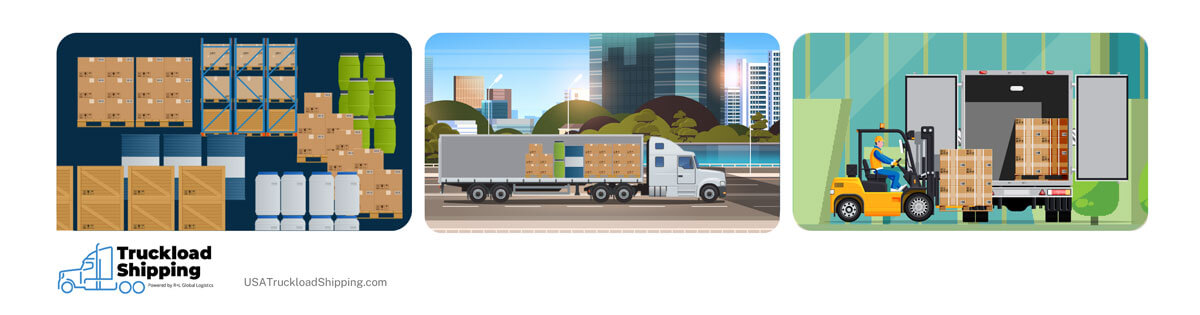
Truckload consolidation shown via a three panel image depicting, from left to right:

Goods from multiple vendors loaded into one trailer

The trailer in transit to its single destination

The trailer being unloaded at its final destination.

This clearly contrasts with FTL shipping since multiple shippers are involved, but the differences between truckload consolidation and LTL shipping are more nuanced. To make these differences easier to grasp, I’ve compiled the most noteworthy ones in the following table.
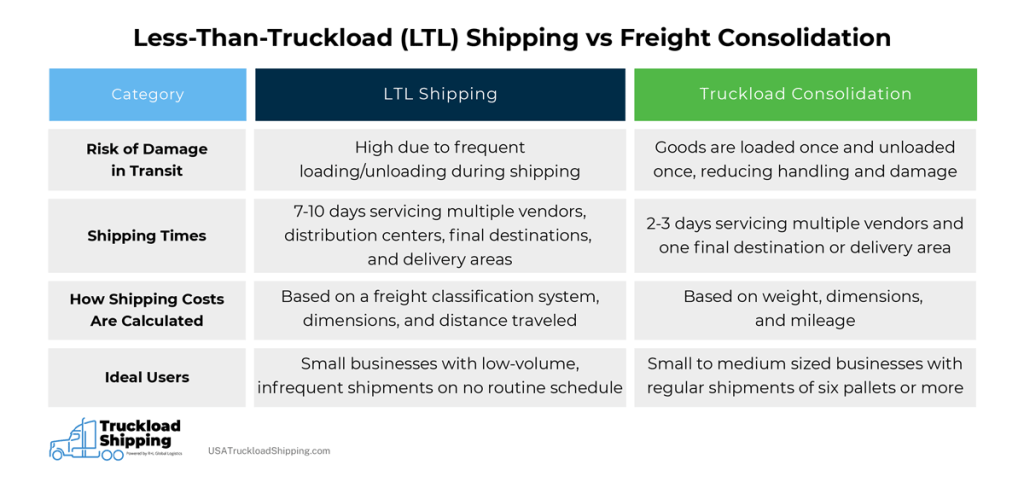
An infographic displaying some of the primary differences between LTL and Freight/Truckload Consolidation. The information presented in the table reads as follows:
Risk of Damage in Transit
LTL: High due to frequent loading/unloading during shipping
Consolidation: Goods are loaded once and unloaded once, reducing handling and damage
Shipping Times
LTL: 7-10 days servicing multiple vendors, distribution centers, final destinations, and delivery areas 
Consolidated: 2-3 days servicing multiple vendors and one final destination or delivery area
How Shipping Costs Are Calculated
LTL: Based on a freight classification system, dimensions, and distance traveled
Consolidation: Based on weight, dimensions, and mileage
Ideal Users
LTL: Small businesses with low-volume, infrequent shipments on no routine schedule
Consolidation: Small to medium sized businesses with regular shipments of six pallets or more

Since shipping costs aren’t calculated using the LTL freight class system, they’re easier to determine and the shipment won’t risk reclassification if it’s inspected. 

While LTL is still the method of choice for shippers who don’t regularly send out large freight orders, consolidation can make your supply chain more efficient if you need FTL-level service on a budget.

Related: What is LTL Shipping

How Truckload Consolidation Improves Supply Chain Efficiency

When it comes to reducing costs and running a lean operation that hits the sweet spot of customer satisfaction and profitability, efficiency is the name of the game. Consolidating multiple loads bound for the same destination or area comes with some inherent boosts to the efficiency of your supply chain.

  • Lower Fuel Costs: When one trailer is used instead of two or more, that means only one power unit is necessary, which cuts fuel usage substantially. 
  • Shorter Delivery Times: When the slow-moving nature of LTL shipping can’t meet your needs, truckload consolidation can shorten your transit times without incurring the total cost of FTL. 
  • Less Handling: LTL shipments are often unloaded, repositioned, and reloaded during transit. This is an invitation for damage to occur, and truckload consolidation avoids this issue by limiting deliveries to a smaller geographical area or single destination, minimizing handling.

What’s good for the supply chain is good for the shipper, and using truckload consolidation strategically will benefit your bottom line in significant ways.

Related: Difference Between FTL and LTL

Benefits for Shippers

The most obvious benefit of truckload consolidation is the savings it offers multiple shippers who are willing to share a trailer. For instance, if three shippers within proximity of each other hired their own truck and trailer to move goods to the same destination, each shipper would owe thousands of dollars in freight fees. By consolidating their shipments into one trailer, they each cut their costs by roughly a third.

Time saved in transit compared to traditional LTL shipments is the second major benefit for shippers. When a customer needs their freight in two to three days, truckload consolidation can meet that expectation and keep customer complaints to a minimum. 

One of the easiest ways for shippers to enact this strategy wisely is to do so via their partnerships with third-party logistics (3PL) providers. An experienced 3PL is staffed with individuals who can quickly determine the best shipping method for any freight shipment in the US.

Consolidate Your Freight With USA Truckload Shipping

The logistics experts at USA Truckload Shipping have decades of experience assisting shippers with warehousing, distribution, and all other links in the supply chain. Give us a call at (866) 353-7178 or fill out a request for proposal online today!

Leave a Reply

Your email address will not be published. Required fields are marked *


USA Truckload Shipping Logo
© Copyright 2025 R+L Global Logistics

R+L Global Logistics
315 NE 14th St., Ocala, FL 34470

(866) 353-7178
magnifiercrosschevron-down