

See more of our coverage on Google.
Add usatruckloadshipping.com as a preferred source!

Freight claims prevention is the practice of reducing cargo damage, loss, and avoidable claim disputes through better packaging, palletizing, documentation, and inspection. This guide explains how to prevent shipping damage while strengthening claim documentation when issues occur.
Freight damage is a consequence of improper packaging, cargo securement, or handling during load and unload. The Federal Motor Carrier Safety Administration’s (FMCSA) Cargo Securement Rule requires carriers to follow cargo securement practices to protect cargo from damage during load, transit, and unload.
Cargo damage is any physical harm, spoilage, or loss that happens to freight during transport, loading, or unloading. It can occur because of shipper or carrier error.
We’ve listed the most common causes of preventable freight damage:
If freight arrives over, short, or damaged (OS&D), the receiving party should document the condition immediately and begin the freight claim process with supporting photos, shipment records, and delivery notes.
Freight claims hinder supply chains with financial losses and operational delays from damaged freight, stockouts, or redeliveries. Shippers can prevent shipping damage by preparing freight correctly before pickup, securing it for transit, and verifying conditions again at delivery.
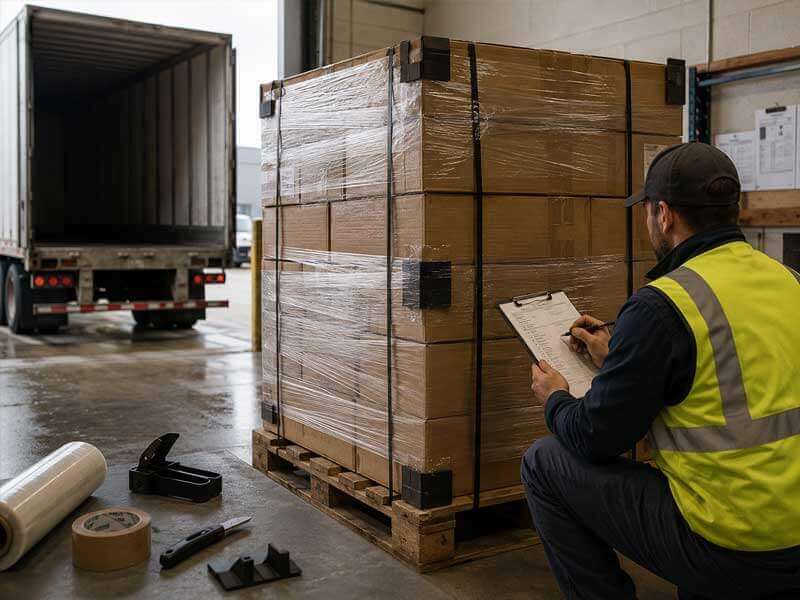
Properly palletizing a load prevents shipping damage during load, transit, and unload. Shippers must package and palletize a load prior to the carrier sending a driver for pickup.
The carrier is responsible for transporting freight, not for packaging or palletizing freight. Accidents can happen during load or unload due to a shipper’s inaccurate packaging or a carrier’s improper handling.
We’ve created a chart to illustrate the essential packaging materials shippers need to protect freight going on and off a truck.
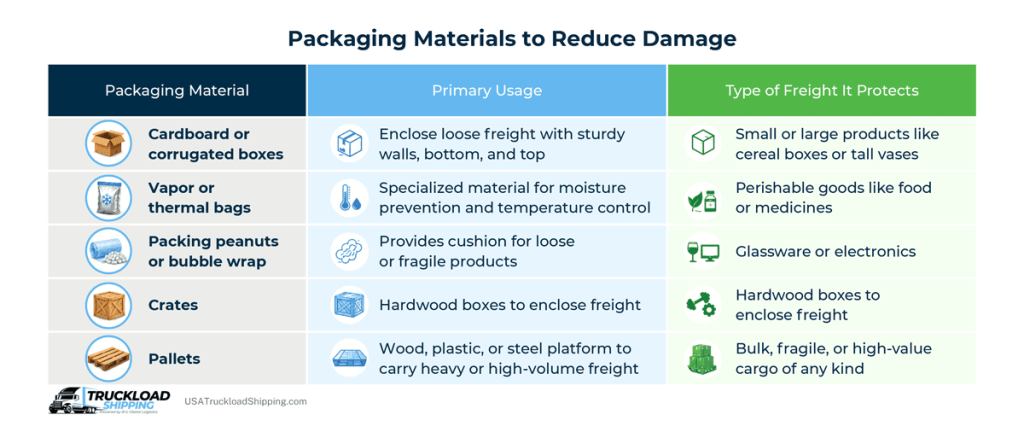
Non-fragile, durable goods can often be shipped in standard boxes, while products that need more structural strength and impact resistance should be packed in corrugated boxes. Extremely fragile items may also need cushioning, such as bubble wrap or packing peanuts, to reduce movement inside the package.
Crates work best for freight that is highly fragile, heavy, or oddly shaped. Pallets are useful for large freight volumes because they keep packages together on a stable platform and make handling safer during loading and unloading.
Shippers prevent shipping damage before freight is picked up with proper packaging, crating, or palletizing practices.
Our checklist helps shippers package, secure, document, and inspect freight before transit and again at delivery.
In the next section, we will review how to document shipping damage to prevent freight claims.
Photos taken at pickup, loading, transit, and delivery, along with the Bill of Lading (BoL), delivery receipts, inspection reports, and proof of delivery (POD) records, help prevent shipping damage claims.
The Bill of Lading and packing list are required shipping documents that outline a shipment’s transportation between the shipper and carrier. A BoL is a document that summarizes freight shipping terms and acts as a contract between the shipper and carrier.
The Bill of Lading form should include freight information like:
A shipper’s packing list should match this information. A packing list is an itemized list of freight packages in a shipment, including number of packages, weight, and size.
Shippers should refer to their packing list and other documentation along with photo evidence to confirm freight isn’t over, short, or damaged.
Let’s take a look at how to document freight pickups and deliveries to prevent freight claims.
Shippers should confirm the freight pickup appointment in advance to ensure sufficient time to prepare, package, label, and palletize freight before the carrier arrives for loading.
Then, the shipper should inspect the freight and take photos with notes describing the package, its contents, and any visible internal or external damage.
We’ve provided a quick freight inspection checklist:
We recommend performing this checklist with your truck driver present to maintain trust between you and your carrier. Shippers can use their or their carrier’s transportation management system to upload photos and notes prior to transit to review at delivery.
Similar to pickup, shippers should inspect their freight delivery and take photos and notes on the condition of packages to verify if it matches pickup conditions.
If freight appears undamaged and each package specified on the packing list has arrived, shippers should sign the POD.
The POD is a document that verifies a shipment has successfully reached its destination. If freight is damaged and not the fault of the shipper, a freight claim would be in order.
A seal, or container seal, is a plastic, metal, or steel device to secure freight and determine when freight is tampered with.
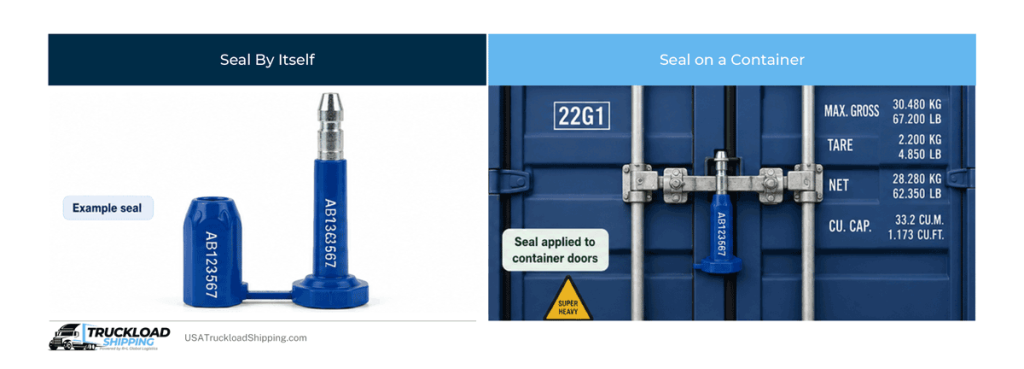
The U.S. Customs and Border Protection (CBP) seal requirements call for verification of seal numbers and related shipping records.
A seal number is a unique series of numbers and letters on a container seal that is attached to a container lock. CBP requires seal numbers to be documented at each point in the shipping process.
Freight professionals verify seal numbers in the following ways:
A shipping manifest is a document that lists shipment contents, quantities, and destination details for tracking and regulatory purposes. Shippers must coordinate with their carrier to keep track and log their seal and seal number through each point for freight tampering or damage.
Seals are typically attached to a container’s door lock and bolted in place. If freight arrives from the port with a broken seal, shippers must check seal logs and report discrepancies to CBP. Freight claims are preventable with a trusted carrier and freight team moving your freight from start to finish.
Preventing shipping damage requires the right packaging, documentation, and carrier coordination. If you need help moving high-value or fragile freight, USA Truckload Shipping can help you choose compliant carriers and safer handling options.
Call (866)-353-7178 to share your shipment details with our freight experts or send any questions you may have through our contact form.
Sources:
Cargo Securement Rules, Federal Motor Carrier Safety Administration, 2014
Seal Requirements for Manufacturers, U.S. Customs and Border Protection, 2025
 Copy URL to Clipboard
Did you find this article helpful?
See more of our coverage on Google.
Add usatruckloadshipping.com as a preferred source!

R+L Global Logistics
315 NE 14th St., Ocala, FL 34470
