


See more of our coverage on Google.
Add usatruckloadshipping.com as a preferred source!

A pallet is a sturdy, flat surface used to transport high-volumes of freight in boxes, bags, or crates. Pallets are typically made of wood, but plastic pallets are also used to transport bulk freight. We’ll walk you through the difference between plastic vs wood pallets and when to use either platform for your shipments.
A pallet is a platform used to unitize freight so that it can move safely by forklift and pallet jack. Pallets also make shipping via truckload (FTL or LTL), rail, or air much easier. Palletized freight can be light or heavy—the limit is the pallet’s rated capacity and the load’s stability.
Wood pallets are made of either:
Plastic pallets are made of either:
Both plastic or wood pallets are made in U.S. standard dimensions:
While wood pallets are more commonly used, plastic pallets offer hygienic qualities. Plastic is easier to clean and sanitize with soap.
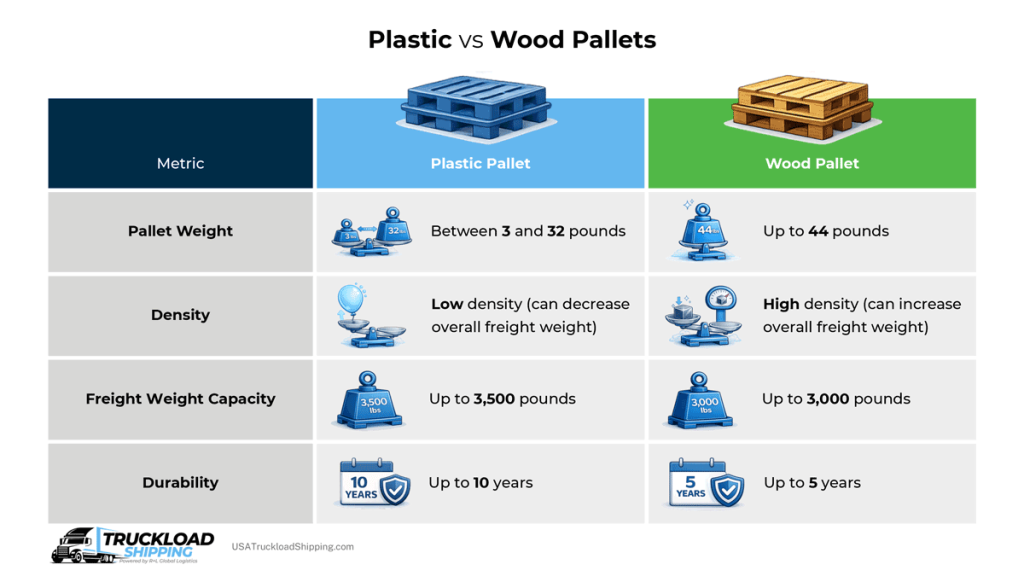
We’ve made a comparison table to further define the differences between plastic and wood pallets:
Pallets can support light or heavy freight when the pallet rating, load stability, and trailer securement match the shipment. Avoid palletizing items that cannot be stabilized unless you use crating, blocking/bracing, or custom bases. We’ve made a chart to compare the best freight to ship on plastic or wood pallets:
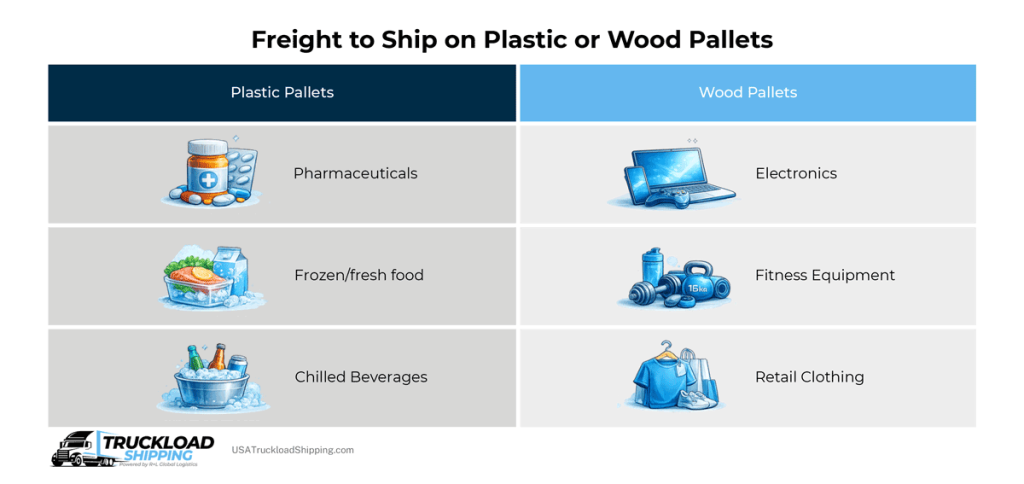
Heavy appliances like washing machines or equipment like lawnmowers are not appropriate to palletize because it impairs loading/unloading speed and can damage pallets.
Plastic pallets are a better option for shippers that require cold chain logistics for freight temperature control. Plastic is more resilient to moisture than wood which can weaken and break down over time from heavy freight and repeated moisture exposure.
Heat treatment for export compliance (ISPM 15) heats wood packaging to a minimum core temperature of 56°C (132.8°F) for at least 30 minutes to reduce pest risk. You can use this heat treatment practice to sterilize your wooden pallets and improve their cleanliness.
Steel and aluminum pallets exist, but most high-volume shippers avoid them unless they need extreme durability in a controlled loop. Metal pallets can add significant tear weight, which can increase freight cost and handling effort.
The weight of your pallet can also add to the weight and total price of your shipment.
You should also factor in costs when considering between wood and plastic pallets. Wood pallets are less expensive than plastic pallets, but both types of pallets are beneficial to shippers depending on their freight needs.
Wood pallets cost between $15 to $25 per pallet, new or recycled. Plastic pallets cost between $20 to $125 or more per pallet, new or recycled.
Decision Tip: Compare cost per trip, not purchase price. A higher-cost plastic pallet can be cheaper over time if it completes many trips and you recover it consistently.
Use plastic pallets when:
Use wood pallets when:
In the next section, we’ll discuss pallet shipping requirements to follow.
When shipping by pallet, follow these guidelines to make loading/unloading and transit safe from pick up to delivery.
Use this checklist before shipping your next palletized load:
Shippers sending freight to big box stores like Costco must palletize freight according to the receiver’s specifications or risk freight rejection or even fines.
No matter where you’re shipping, USA Truckload helps you check each requirement off your list with our network of 22,000+ carriers trained and experienced in handling plastic and wood palletized freight.
We ensure each load is secured with blocking and bracing for both consolidated freight on LTLs or full trailers for FTL.
Shipping by pallet? We’re ready to help. Our freight experts are trained to handle plastic or wood pallets for high-quantities of freight moving interstate or cross-country. Call us at (866)-353-7178 or grab an instant quote in just minutes. You can also submit any questions you have about our services to our contact page.
 Copy URL to Clipboard
Did you find this article helpful?
See more of our coverage on Google.
Add usatruckloadshipping.com as a preferred source!

R+L Global Logistics
315 NE 14th St., Ocala, FL 34470
