

See more of our coverage on Google.
Add usatruckloadshipping.com as a preferred source!

Intermodal connects multiple modes of transportation, like ship to truck to rail, to deliver freight, and this guide is for shippers, businesses, and logistics professionals who need to compare door-to-door vs ramp-to-ramp intermodal shipping.
Intermodal shipping is a freight method that moves goods using multiple transportation modes (typically truck and rail) without unloading the freight itself. It reduces handling, improves cost efficiency, and supports long-distance hauls.
Intermodal is used to ship a variety of commodities according to the Federal Railroad Administration (FRA), an agency of the U.S. Department of Transportation (DOT). A 2018 FRA freight rail overview report found that 52% of rail freight consists of agriculture products, while the remaining 48% consists of consumer goods.
Here’s what you can move on intermodal:
Shippers load freight into a 20-foot or 40-foot container that can move across multiple transportation modes, include:
Containers are attached to railcars in one of two ways:
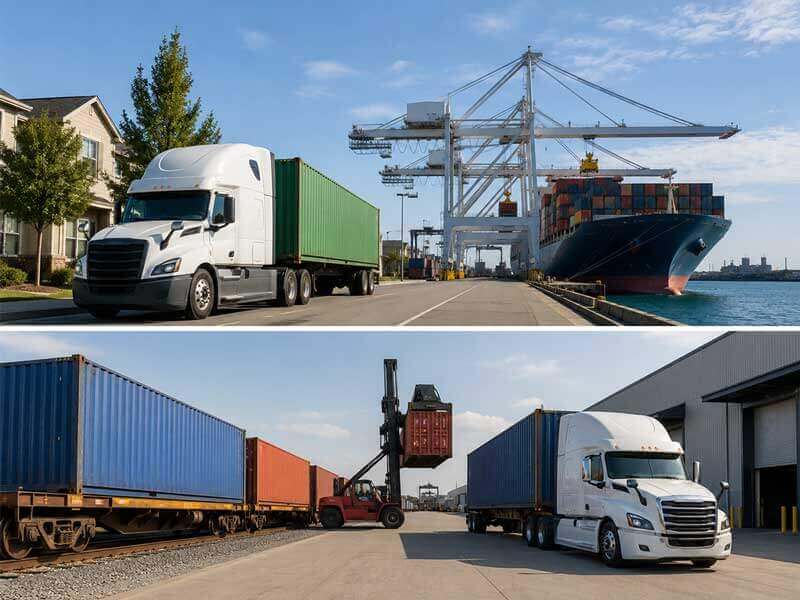
The most common form of intermodal transportation in the U.S. is truck to rail. Truckload carriers shipping intermodal freight unload the container chassis from the ship at the port of entry using a crane to lift and attach the container chassis to the truck’s chassis trailer. Then the driver hauls the container to its destination, usually a localized location like a rail terminal, warehouse, or distribution center.
We’ve made a graphic to illustrate this process.
![Infographic depicts domestic intermodal freight shipping scenario, including (from left to right): Origin point (container arrives at port of entry on ship); Second point (truck loads container chassis onto trailer); and Destination point (truck delivers container to train terminal to attach to the container-on-flatcar [COFC])](https://usatruckloadshipping.com/wp-content/uploads/2026/06/domestic-intermodal-shipping-scenario-1024x447.png "domestic-intermodal-shipping-scenario")
As you can see, the freight is still on a train en route to its final destination. This is where door-to-door and ramp-to-ramp intermodal freight shipping is used to deliver goods.
Shippers can choose between door-to-door or ramp-to-ramp to best fit the final customer’s needs. Let’s break down what each of these services look like in the following sections.
Door-to-door intermodal is a mode that delivers containers directly to a customer’s location instead of a logistics hub or terminal.
Take a look at this graphic to see how door-to-door intermodal delivers freight without additional connection points.
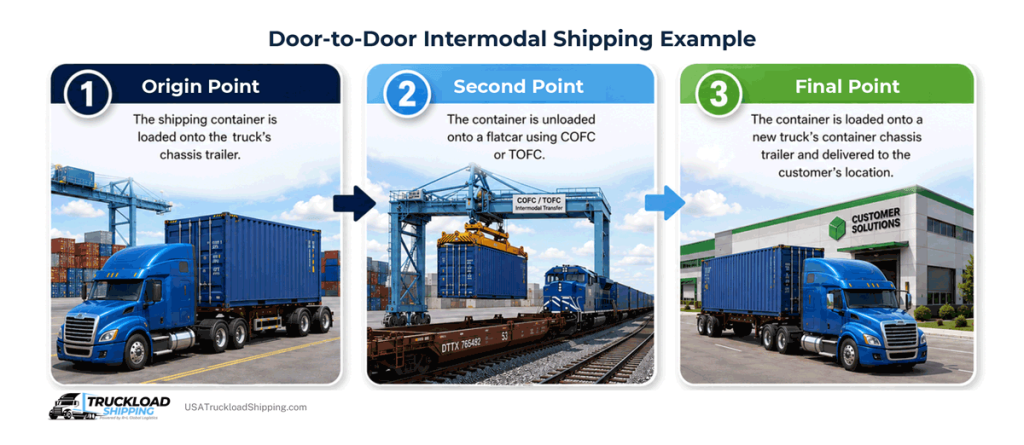
This mode eliminates excess stops and reduces transit time to deliver goods to the end user’s business, warehouse, or distribution center.
Ramp-to-ramp intermodal is a mode that moves a container or trailer between the rail terminal closest to the customer and the rail terminal closest to the receiver.
Ramp-to-ramp service reduces costs by eliminating final-mile delivery, while door-to-door service increases cost but reduces handling complexity and coordination risks. Here’s a graphic to depict what this process looks like:
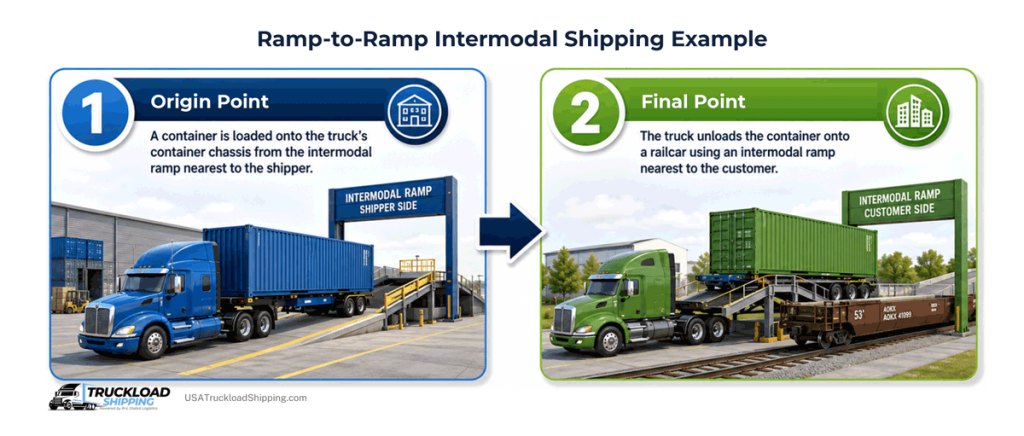
Ramp-to-ramp intermodal utilizes specialized loading ramps that are designed to attach to railcars. Unlike door-to-door that hauls freight to the end user, ramp-to-ramp includes another trip to deliver freight to the end user’s warehouse or business.
Shippers comparing intermodal vs truckload often evaluate cost, transit time, fuel efficiency, shipment distance, and service reliability for long-haul freight.
According to a 2017 IANA report, intermodal shipping reduces costs by 15 to 18% compared to truckload shipping, largely by minimizing fuel consumption and long-haul labor costs.
The IANA is a U.S. organization that promotes intermodal freight shipping and administers the Uniform Intermodal Interchange & Facilities Access Agreement (UIIA) between ocean, rail, and truck carriers.
Let’s take a look at what’s included in both of these intermodal shipping modes and how to use them for your long-distance shipments.
Drayage is a service that moves freight containers over short distances, typically between ports, warehouses, and rail terminals. Drayage uses specialized trucks equipped with a container chassis to seamlessly pickup and dropoff containers. This process helps shippers navigate port congestion and reduce intermodal transit time.
Transportation is split into three main legs or points:
Shippers can use drayage services for both ramp-to-ramp or door-to-door intermodal, but keep in mind that only door-to-door is a full-service mode. Ramp-to-ramp intermodal uses drayage to expedite delivery only between ports, warehouses, or terminals.
In truckload transportation, shippers can schedule freight pickups with carriers on dates and times that fit their operations. Intermodal shipping, however, requires both truckload pickup appointments and train appointments.
Rail shipping is a mode of transportation that moves goods over long distances by train. Rail shipping operates on a fixed schedule with multiple standard departing and arrival times for shippers to choose from. This includes early morning or afternoon freight shipping times.
Missing an appointment for a rail or truckload shipment can lead to freight delays and costly accessorial charges like layover.
Shippers should avoid using intermodal shipping for time-sensitive freight. Intermodal transport is best for long haul shipments traveling over 500 miles and that require freight security. Expedited shipping is the better option when you need to deliver goods with tight deadlines.
Since intermodal freight shipping includes multiple modes, there are a couple of cost drivers to consider in your final rate:
In the U.S., there are six Class I railroads your freight may travel on:
Freight rates vary between railway providers, freight routes, and commodity handling, including hazmat and drayage services. Let’s take a look at some of the common cost drivers whether you’re shipping door-to-door or ramp-to-ramp.
Drayage services come with a corresponding accessorial charge. Shippers can learn how to calculate drayage rates based on factors like:
Demurrage and detention charges are accessorial fees for shippers holding shipping containers beyond the allotted dwell time to load or unload freight. These charges can increase a freight bill by up to $300 per container per day for demurrage and up to $150 for detention each hour shippers exceed dwell time.
Port and rail terminal challenges may result in additional costs to keep freight moving.
Common constraints include:
Shippers use ramps like roll-on for ramp-to-ramp intermodal freight. This allows carriers to drive on and off railcars. Shippers must coordinate with their carrier to plan for the required mode and avoid unnecessary fees.
Whether you ship ramp-to-ramp or door-to-door intermodal, this mode offers standardized train lanes and strategic freight routes to deliver freight on time.
Even though intermodal works best for long-haul shipments traveling 500+ miles, according to the IANA, the common transit time for deliveries are “a truck plus a day.”
Intermodal lanes are a combination of truck and railroad systems designed to accommodate freight for lengthy hauls with services that reduce transit time by:
Shippers can rely on intermodal freight shipping to deliver goods within 7 to 10 days depending on route, distance, and if expedited services are applied.
Not sure which mode works best for your customers? Use our checklist to determine the best mode for cost control, delivery time, and customer satisfaction.
For Door-to-Door
Choose door-to-door intermodal if:
For Ramp-to-Ramp
Choose ramp-to-ramp intermodal if:
Choosing between ramp-to-ramp or door-to-door intermodal requires communication between shippers, carriers, receivers, and facilities.
If you’re uncertain how to implement intermodal in your supply chain management, consulting with a licensed freight broker or third-party logistics (3PL) company can simplify route strategies and improve scheduling.
USA Truckload Shipping is a 3PL who partners with 22,000+ vetted and federally compliant carriers with both truck and rail capacity to ship your goods. Call our freight experts at (866)-353-7178 to customize your intermodal strategy or submit your freight request for proposal today.
Sources:
Intermodal 101: Getting Started in Intermodal, IANA, 2017
Uniform Intermodal Interchange & Facilities Access Agreement, IANA
Freight Rail Overview, FRA, 2025
 Copy URL to Clipboard
Did you find this article helpful?
See more of our coverage on Google.
Add usatruckloadshipping.com as a preferred source!

R+L Global Logistics
315 NE 14th St., Ocala, FL 34470
