

See more of our coverage on Google.
Add usatruckloadshipping.com as a preferred source!

A freight fuel surcharge is an additional fee carriers add to shipping to offset changes in diesel fuel costs. As diesel prices rise, these surcharges can increase total transportation expenses, even when base freight rates stay the same. Shippers can reduce the impact by improving transportation efficiency and negotiating more favorable carrier terms.
Rising fuel costs increase a carrier's operating expenses. These operating expenses are reflected in the rates and fuel surcharges shippers pay. While other factors that impact freight expenses can be influenced, the price of fuel is the hardest to control.
Fortunately, shippers can mitigate their freight costs as the price of diesel rises using 10 unique methods:
We’ll explain how each one will help reduce the impact of rising diesel expenses on overall freight costs.
While most freight shipments are picked up and delivered by truck, it might not always be a fuel-efficient option for long-distance shipments of large volumes of freight or bulk goods. Using a combination of truckload and rail transportation can help reduce fuel costs.
Rail shipping is three to four times more fuel-efficient than moving freight by truck. Organizing a long-haul shipment that utilizes rail transport for most of the journey and switching to truck for pickup and delivery can help mitigate diesel costs.
Freight consolidation is a shipping strategy that combines smaller freight shipments into one. As diesel costs rise, shipping multiple truckloads of freight can add up. Consolidating shipments into one trailer reduces the number of vehicles you require to ship freight, which leads to fewer total trips. This lowers the overall fuel costs a shipper has to pay.
Optimized shipping routes lower fuel costs by reducing the number of miles a shipment travels. An optimized route typically eliminates unnecessary mileage, bypasses congested routes, repositions distribution points, and matches freight with more efficient lanes.
Hiring a third-party logistics (3PL) provider to transport your freight is a great way to access optimized routes. A 3PL is an external company that manages parts of a shipper’s supply chain, such as warehousing, inventory tracking, and shipping. 3PLs can use their advanced inventory tracking technology to find the most direct and efficient route for your shipment.
An accessorial charge in logistics is an extra fee added to a freight bill when carriers provide additional services beyond pickup and delivery. Accessorial charges only exacerbate the expenses caused by rising diesel costs.
Shippers can reduce accessory charges by giving carriers complete delivery information before pickup, avoiding unnecessary shipment changes, and staging freight before pickup to reduce detention time.
Onshoring is the practice of businesses conducting manufacturing and operational processes within their home country. Nearshoring is similar, except it moves manufacturing and operational processes to a foreign nation that’s geographically closer to a business’s home country.
Onshoring and nearshoring significantly reduce the distance freight has to travel, which helps mitigate the rising cost of diesel fuel. However, transitioning to onshoring and nearshoring can take time for companies that conduct most or all of their manufacturing overseas.
One-off shipments are great for infrequent shippers, but costs can quickly add up as volume increases. This can be especially problematic when diesel costs are high. Establishing a long-term contract gives shippers access to negotiated rates that are predictable, lower, and more stable than spot rates.
As a result, a long-term contract helps shippers mitigate the impact of rising diesel costs on their shipments.
Expanding pickup and delivery windows reduces driver wait times, missed appointments, and other scheduling complications, which can prevent unnecessary fuel consumption. To expand pickup and delivery windows, shippers should replace rigid appointments with broader time ranges.
This can be done by offering first-come first-served periods, and coordinating receiving times with customers.
Numerous operational constraints can cause trucks to idle, take inefficient routes, or make unnecessary trips that burn more fuel. While shippers can’t stop every constraint a carrier might encounter, they can provide flexibility that reduces the amount of fuel a shipment consumes.
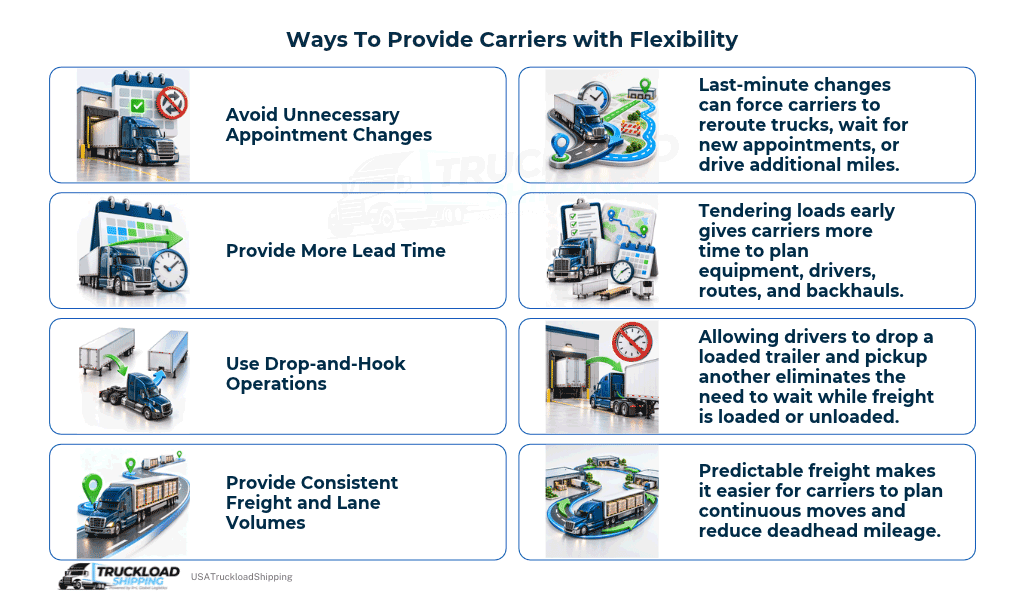
Each of these methods can help reduce the amount of fuel used on a shipment and lower overall shipping costs.
Palletization is the process of stacking packages on a pallet and securing it with plastic wrapping or straps. Gaps between boxes on a pallet limit the amount of freight that can be shipped on a single truckload. A second shipment might have to be scheduled to transport leftover freight that didn’t make it on the stack.
Arranging boxes tightly on a pallet eliminates gaps and increases the number of packages that can fit on the stack. Efficient palletization maximizes the volume of freight that can fit inside a trailer, which leads to fewer shipments and lower fuel costs shippers have to pay.
A fuel surcharge formula is a method of calculating an extra fee to cover rising diesel costs. Fuel surcharges aren’t regulated by the federal government or standardized by agencies like the U.S. Energy Information Administration (EIA). Instead, most carriers and 3PLs use their own formula.
Shippers can limit the impact of rising diesel prices by reviewing and negotiating the formulas carriers use to calculate fuel surcharges.
Important variables to review include:
Ensuring these inputs accurately reflect the carrier’s operations can prevent shippers from overpaying for fuel while still allowing carriers to recover legitimate increases in diesel expenses.
The price of diesel can rise due to various factors, such as higher crude oil prices, tighter inventories, reduced refining capacity, higher refining margins, and geopolitical conflicts and supply disruptions. Currently, there are various geopolitical conflicts that are causing an increase in prices.
These include:
These ongoing conflicts don’t seem to have an end in sight, which means diesel prices are likely to remain high.
You may not be able to control the price of fuel, but you can choose a reliable 3PL. That’s where R+L Global Logistics comes in. We use an extensive network of carriers and routing technology to provide our customers a reliable service and an efficient route for their freight shipments.
Our carriers can provide standard shipping, expedited shipping, drayage, white glove delivery, and hazardous materials transportation. Whatever shipping challenges you might face, R+L Global Logistics is here to help. Get your freight moving with a 3PL you can trust by filling out an RFP.
You can also contact us or call us at (866) 353-7178 for more information.
 Copy URL to Clipboard
Did you find this article helpful?
See more of our coverage on Google.
Add usatruckloadshipping.com as a preferred source!

R+L Global Logistics
315 NE 14th St., Ocala, FL 34470
