
USA Truckload Shipping Logo

What is a Bill of Lading (BoL) in Freight Shipping?

Author Photo
Written by Joe Weaver
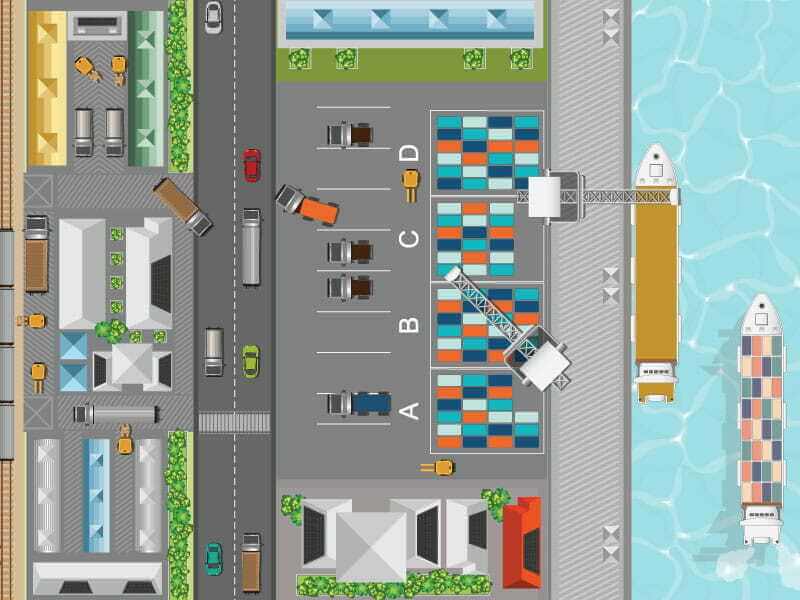
A digital image depicting an overhead view of an ocean port, with containers, a container vessel, a container crane, and storage facilities visible.

See more of our coverage on Google.

Add usatruckloadshipping.com as a preferred source!

Key Takeaways:
Confused about bills of lading? Learn about the most frequently-used in freight shipping, their key differences, and how their role in freight shipping.

Freight shippers and carriers require detailed documentation to track transactions from shipment to receipt of goods. The bill of lading, also known by the acronyms BoL or B/L, is one such document. Knowing the difference between the most common freight BoLs is essential for all parties involved in a freight delivery transaction. 

What Are Bills of Lading?

In transportation, a BoL is used to communicate several key pieces of information between brokers, carriers, shippers, and receivers. It is usually issued by the carrier or shipper, though other parties such as brokers and freight forwarders are responsible for this under certain circumstances.

Some specific pieces of information that should be found on nearly any BoL are:

  • Evidence of Contract of Carriage: This includes details regarding the destination, type, and amount of the freight being shipped. Sometimes, details on the condition of the carriage are also included. 
  • Contact Information of Involved Parties: Usually, these parties are the shipper, carrier, freight broker, and consignee.
  • Title of the Goods: Used to determine ownership and transferability of the delivered goods.

While all bills of lading need to contain these key pieces of information, a variety of BoLs exist to accommodate specific freight shipping types. I’ve compiled the most commonly used BoLs for freight and truckload shipping in the graphic below.
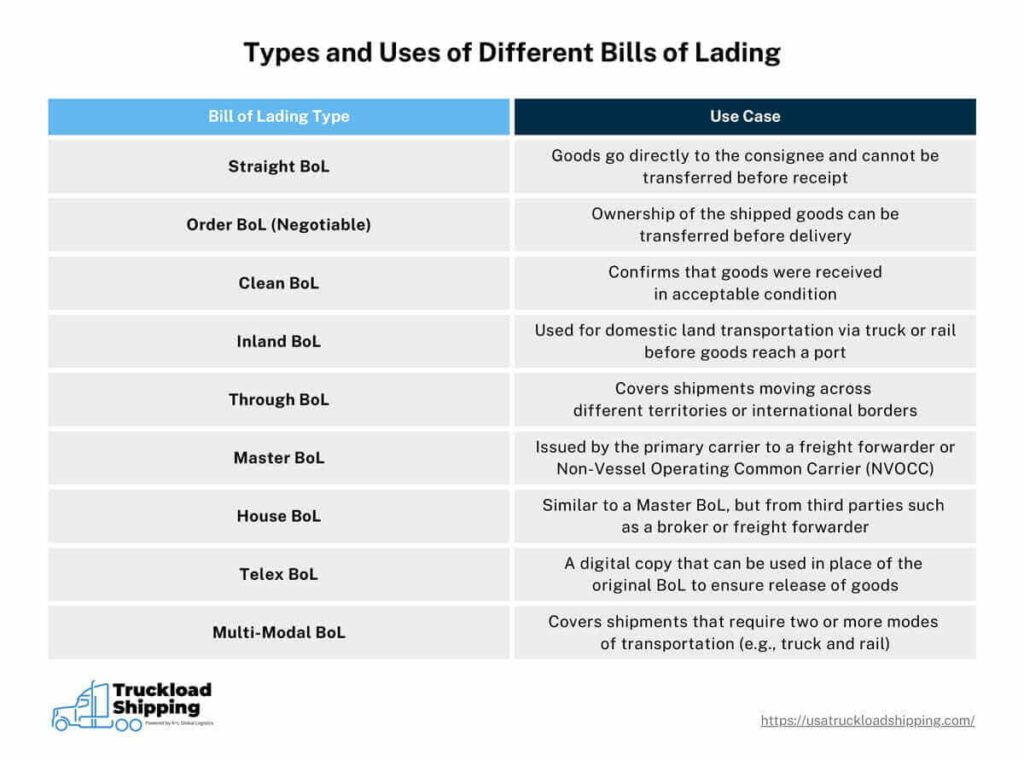
An infographic titled “Types and Uses of Different Bills of Lading” describing how multiple different types of bills of lading can be applied to freight shipments. The infographic is separated into two columns labeled (from left to right): “Bill of Lading Type” and “Use Case”. The information in the graphic reads as follows:


Straight BoL: Goods go directly to the consignee and cannot be transferred before receipt
Order BoL (Negotiable): Ownership of the shipped goods can be transferred before delivery
Clean BoL: Confirms that goods were received in acceptable condition 
Inland BoL: Used for domestic land transportation via truck or rail before goods reach a port
Through BoL: Covers shipments moving across different territories or international borders
Master BoL: Issued by the primary carrier to a freight forwarder or Non-Vessel Operating Common Carrier (NVOCC)
House BoL: Similar to a Master BoL, but from third parties such as a broker or freight forwarder
Telex BoL: A digital copy that can be used in place of the original BoL to ensure release of goods
Multi-Modal BoL: Covers shipments that require two or more modes of transportation (e.g., truck and rail)

If your shipment moves via international waters, you will also need to use an ocean bill of lading during transport from one country to another.

Another shipping document called proof of delivery (PoD) sometimes gets confused with the BoL.

While a bill of lading establishes ownership and terms of shipment, the proof of delivery is focused on confirmation that the goods were received in acceptable condition. The PoD does not confer rights of ownership to the signee. 

Related: Bill of Lading vs Proof of Delivery: Key Differences in Shipping

Avoid the Confusion With USA Truckload Shipping

While it’s not the most exciting aspect of freight shipping, proper documentation with the correct bill(s) of lading is essential for shippers to run an orderly business. Partnering with an experienced third-party logistics provider (3PL) will help ensure that your shipping paperwork is accurate. If you’re a shipper looking for this and other logistics services, you’re in the right place. 

USA Truckload Shipping has decades of experience connecting shippers to carriers, warehouses, and other service providers. From short rails to long hauls, our network can store and ship your goods to points in the U.S. and beyond

Our full list of services includes:

Don’t let improper documentation delay your shipments. Call us at (866) 353-7178 or submit a risk-free request for proposal online today!

Joe Weaver
Joe Weaver

Joe Weaver has spent nearly a decade reviewing and researching equipment vital to the transportation industry. As a Content Strategist for USA Customs Clearance, he serves as a valuable source of e-commerce needs and knowledge. His well-researched and practical knowledge with regard to Customs laws and import needs provides solutions that benefit entire supply chains, from supplier to final customer.

Read Full Bio
Share This Article
copy-link-to-clipboard Copy URL to Clipboard
[DISPLAY_ULTIMATE_SOCIAL_ICONS]
google G icon logo

Did you find this article helpful?

See more of our coverage on Google.

Add usatruckloadshipping.com as a preferred source!

Add usacustomclearance.com as a preferred source!
See more of our coverage in Google's Top Stories.

Leave a Reply

USA Truckload Shipping Logo
© Copyright 2026 R+L Global Logistics

R+L Global Logistics
315 NE 14th St., Ocala, FL 34470

(866) 353-7178
magnifiercrosschevron-down