

See more of our coverage on Google.
Add usatruckloadshipping.com as a preferred source!

Cargo theft is the illegal act of stealing goods from commercial freight shipments moving in commerce. Incidents of cargo theft began to rise sharply in 2020 and have continued to rise with each passing year. The crime comes in a variety of forms, giving criminals multiple avenues for stealing freight. Shippers can reduce the risk of cargo theft by verifying carriers, securing shipment information, controlling pickup authorization, training employees, and working with logistics partners that use secure equipment and facilities.
Cargo theft remains a persistent risk throughout the logistics industry. Incidents of the crime began rising in 2020 with the start of the COVID-19 pandemic and continues to be a problem that plagues the logistics industry. The strategies criminals use to perpetrate the crime are also evolving.
Most cargo thefts started out as opportunistic breaking and entering. By 2023, criminals were using freight fraud to facilitate fictitious pickups. Between 2024 and 2025, thieves began exploiting digital systems that brokers, carriers, and shippers use.
Travelers reported 662 cargo-theft incidents in Q2 2026. A variety of items, typically those of high value, are frequently targeted by criminals. In the next graphic, we’ve provided data on the types of commodities that were stolen during Q2 of 2025 and Q2 of 2026.
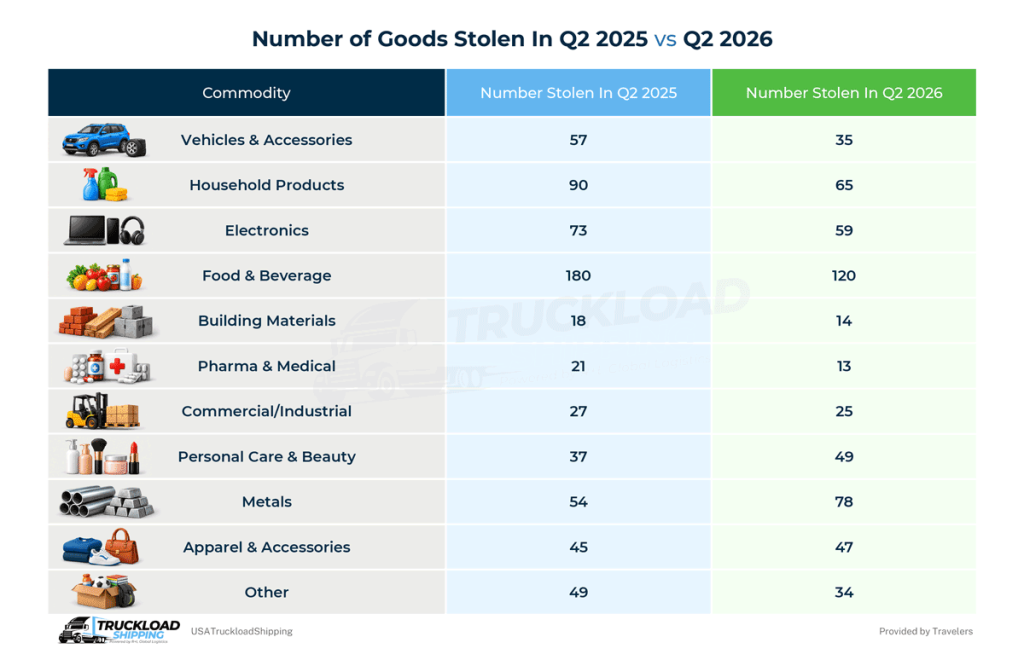
Although cargo theft remains a significant problem, reported thefts involving several commodity categories declined between Q2 2025 and Q2 2026. Metals, personal care and beauty products, and apparel were notable exceptions.
The main types of cargo theft include straight cargo theft, strategic cargo theft, pilferage, cyber-enabled cargo theft, hijacking, and ransom. We’ll explain each so you have a better understanding of how thieves commit this crime.
Straight cargo theft is when freight is physically stolen from its current location, such as truck stops, parking lots, rail yards, and other places where the freight is left unguarded. When criminals steal goods, they’re typically looking for items they can quickly resell. This version of cargo theft is often opportunistic and requires little planning.
Strategic cargo theft is when criminals employ tactics like fraud and deception to steal freight. Thieves use this strategy to trick brokers and carriers into releasing their freight to the criminals. Here’s a graphic outlining the different types of strategic cargo theft.
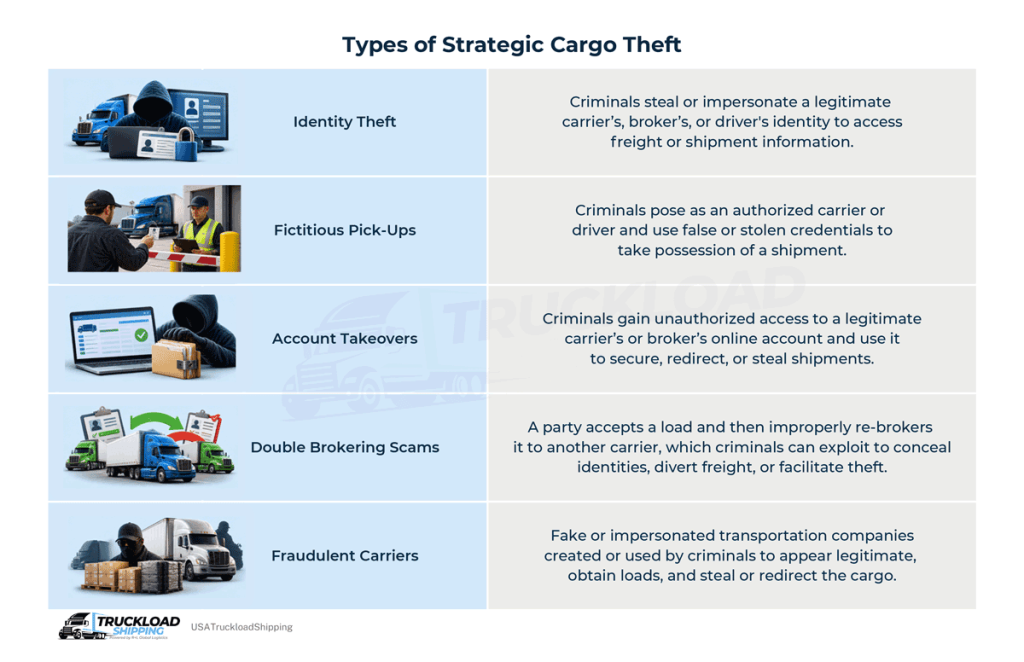
Often, criminals committing strategic cargo theft will use a combination of these methods to steal freight.
Pilferage is a type of cargo theft that involves stealing part of a freight shipment instead of the entire shipment. This form of theft can be harder to detect because the shipment appears intact until it reaches the customer or a warehouse. By the time an error is detected, the criminals have already made off with the cargo.
Cyber-enabled cargo theft is when criminals use a variety of technological methods to steal freight, such as phishing, hacked email accounts, spoofed websites, malware, or stolen shipment data. This allows thieves to intercept or reroute freight shipments.
Incidents of cyber-enabled cargo theft are increasing due to the technology the logistics industry uses. Today’s freight operations are highly digital, which opens a variety of avenues for attack.
Hijacking is when criminals forcibly take control of a vehicle transporting freight. Criminals who commit this type of cargo theft will follow a truck leaving a shipping facility. They wait for the truck to slow or stop, and then confront the driver and take control of the vehicle.
Ransom is a type of cargo theft in which criminals will steal cargo and refuse to release it until they’re paid. Criminals might obtain stolen freight using any of the methods previously mentioned.
After obtaining the freight, they move it to an undisclosed location. The criminals responsible will then reach out to the shipper or broker and demand payment for the shipment. In some cases, the shipment might not be recovered.
Thieves can seize freight at different points in a shipment’s journey. We’ve provided some data from Q2 2026 showing where cargo is commonly stolen.
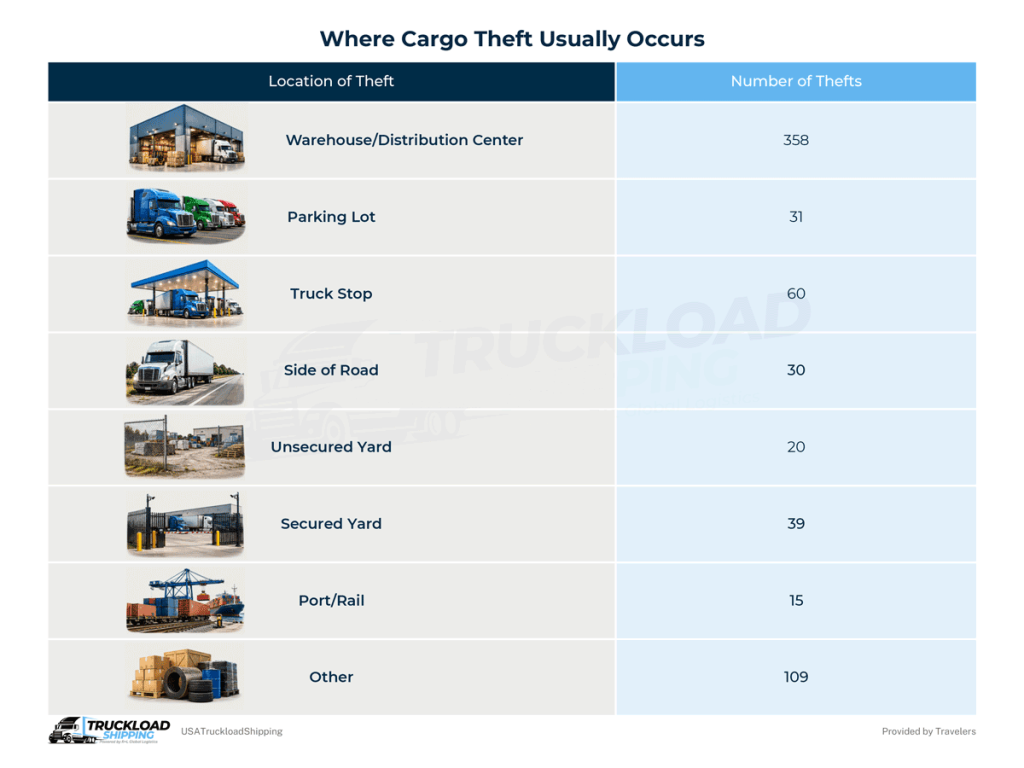
Cargo thefts most often occur at warehouses because of the high concentration of valuable goods and long periods during which freight is stationary. That said, other areas still present opportunities for freight to be stolen.
Although shippers rely on logistics providers to protect freight in transit, they can take several steps to reduce theft risk.
These include:
Using these techniques provides shippers with a robust defense against cargo theft.
Shippers who become victims of cargo theft should preserve records and evidence, notify law enforcement, alert logistics partners, contact their insurer, attempt to recover the shipment, and investigate how the theft occurred. We’ve provided a graphic explaining how to follow each step.
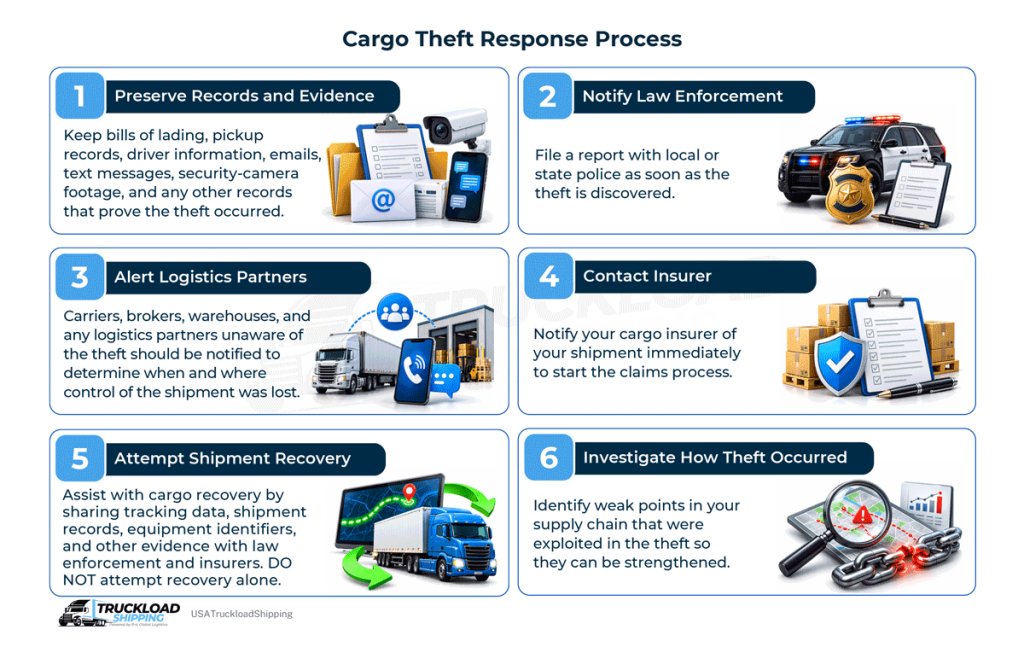
Cargo theft is a serious matter, which means shippers should follow these steps as quickly as they can after discovering their freight has been stolen.
USA Truckload Shipping understands the ongoing threat of cargo theft. As a 3PL, we use a strict vetting process that ensures every carrier in our network is safe and legitimate. Customers that book loads with USA Truckload Shipping also receive tracking updates. This allows them to keep track of the progress of their freight as it travels to the final destination.
If you’re ready to ship freight with a transportation provider you can count on, then fill out your RFP today. You can also contact our team or give us a call at (866) 353-7178 for more information about the services we provide.
 Copy URL to Clipboard
Did you find this article helpful?
See more of our coverage on Google.
Add usatruckloadshipping.com as a preferred source!

R+L Global Logistics
315 NE 14th St., Ocala, FL 34470
